
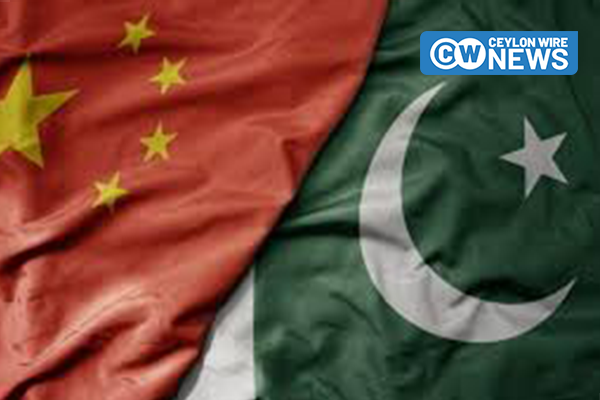
Pakistan’s relationship with Chinese enterprises—once hailed as a cornerstone of economic cooperation—has entered a turbulent new phase.
The tensions playing out in Islamabad’s committee rooms are more than bureaucratic sparring; they reflect a profound erosion of trust between the Pakistani state and Chinese businesses operating in the country.
What has emerged over the past months is a troubling picture of friction, suspicion, and a widening gap in expectations.
The most recent confrontation unfolded on November 19, when Federal Board of Revenue (FBR) Chairman Rashid Langrial delivered an unambiguous warning to representatives of four Chinese ceramic firms: either comply with mandatory production monitoring or pack up and leave.
It was a rare moment of open defiance toward Beijing-linked companies, made even more striking because it came during a meeting of the Senate Standing Committee on Finance—a venue where foreign investors usually receive conciliatory reassurance, not ultimatums.
Langrial’s blunt message was triggered by what the government estimates to be around PKR 30 billion ($107 million) in annual tax evasion by tile manufacturers.
According to the FBR, chronic underreporting of production has long plagued the ceramic sector, prompting the decision to install Artificial Intelligence-enabled cameras across all factories—local and foreign-owned alike—to generate accurate output data.
The technology, officials insist, is designed to eliminate human manipulation and guarantee transparency.
Yet, the Chinese companies flatly opposed the move. Their management, speaking through a representative, argued that placing cameras on production lines would risk exposing trade secrets. This explanation failed to convince Langrial, who insisted the cameras would capture only production counts, nothing more.
He pointed out that the FBR had already reduced the requirement from 16 cameras to five per facility—a concession offered specifically in response to concerns raised by Chinese investors.
Still, the companies stood firm, reiterating that their boards of directors had rejected any surveillance inside their factories.
It was at this point that Langrial delivered his now widely quoted retort: “If your board of directors does not agree to install the cameras, then you should stop work.”
The comment laid bare the depth of frustration within Islamabad’s tax machinery, which has long accused both local and foreign firms of exploiting loopholes to avoid paying their fair share.
The dispute also sheds light on Pakistan’s broader struggle against entrenched revenue leakages.
For years, industries formally registered within the tax net have been accused of manipulating production figures. To curb these practices, the government recently identified 18 high-risk sectors where monitoring cameras would be installed.
The ceramic industry is merely one of the latest to fall under scrutiny, following earlier crackdowns on sugar and cement manufacturers.
The FBR claims that after camera deployment in those sectors, the state is expecting additional revenue gains of PKR 76 billion ($271 million) and PKR 102 billion ($364 million), respectively, in the current fiscal year.
State Minister for Finance Bilal Azhar Kayani defended the monitoring initiative, calling it a pro-business reform because it eliminates the need for FBR officers to physically inspect factories.
The AI-driven system, he said, would provide impartial, tamper-free data. Kayani emphasised that the camera reduction—from 16 to five—demonstrated Islamabad’s attempt to meet businesses halfway.
The real objective, he insisted, was simply the accurate counting of goods for proper tax assessment.
However, the Chinese companies continue to argue that their operations in other countries, including Saudi Arabia, have not faced similar surveillance requirements.
They also criticised Pakistan’s alleged tendency to make abrupt tax policy decisions without adequate consultation, claiming the camera mandate was imposed without industry input.
This complaint struck a nerve, as it touches on a recurring grievance among foreign investors: policy unpredictability.
Langrial countered this by revealing that the Pakistan Tiles Manufacturers Association itself had requested government intervention, complaining about widespread underreporting and unfair competition.
In other words, domestic companies were calling for stricter oversight—primarily because they felt certain foreign players were exploiting lax monitoring to gain illicit advantages.
To bolster his argument, Langrial cited the example of Pakistan’s sugar industry, long notorious for tax evasion. Cameras were installed at mills across the country—even at one owned by Industry Minister Haroon Akhtar Khan—without objections from any quarter.
Beyond taxes and surveillance, the Senate committee meeting also witnessed a separate but equally charged debate—this time over alleged dress code impositions on female employees at certain commercial banks.
The committee instructed the State Bank of Pakistan to investigate claims that staff were being forced to wear abayas.
Senator Dr Zarqa Taimur denounced such directives as intrusive and unnecessary, arguing that Pakistani women already dress modestly.
Senator Farooq Naek went further, equating the coercion to forcing men to grow beards—an act he described as equally unacceptable.
This clash, though unrelated to the dispute with Chinese firms, underscored a larger theme: Pakistani institutions are battling internal inconsistencies, regulatory overreach, and credibility issues at the very moment they are trying to enforce stricter compliance on powerful multinational enterprises.
For Islamabad, the confrontation with Chinese companies carries significant geopolitical weight.
Beijing has long been the country’s most influential economic partner, especially through large-scale infrastructure projects and industrial investments. Publicly challenging Chinese firms—especially on issues such as tax compliance—marks a shift in tone that reflects both political pressure and public frustration.
Pakistan’s chronic fiscal instability has forced the government to look inward, demanding higher contributions from all industries, regardless of their foreign patronage.
At the same time, the pushback from Chinese companies exposes a deeper tension: the assumptions that framed the early years of the China-Pakistan Economic Corridor (CPEC) no longer align with today’s realities.
Chinese firms entered Pakistan expecting leniency, predictability, and privileged treatment. But Pakistan, under acute financial strain and mounting public debt, is now less willing to indulge those expectations.
This new posture is generating friction, and the implications could extend far beyond the ceramic industry.
The confrontation over production monitoring is symptomatic of a broader breakdown in the economic relationship—one where mutual interests are increasingly overshadowed by suspicion.
Whether it is disagreements over tax enforcement, disputes about surveillance, or complaints about regulatory unpredictability, the once-vaunted “iron brotherhood” between Pakistan and China is showing visible cracks.
As Pakistan intensifies its drive to plug revenue leakages, more sectors dominated by foreign investors could face similar standoffs. And as Chinese companies navigate a less forgiving environment, these conflicts are likely to multiply.
What is unfolding now is not an isolated episode but part of a larger pattern—one that signals difficult days ahead for a partnership that once promised seamless cooperation but today stands strained, tested, and increasingly uncertain.