
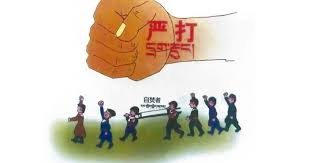
The cultural repression in Tibet reached a new low after Chinese authorities burnt traditional prayer flags under the pretext of fire hazard control. The incineration of the flags comes on the heels of earlier incidents involving the removal, replacement, or manipulation of traditional Mani prayer flags found throughout Tibet. Locals labelled it as an escalation in Beijing’s efforts to erase visible Tibetan religious traditions.
The past few years have witnessed several incidents of removal and demolition of Mani flags and wheels by Chinese officials for unreasonable, illogical and dubious reasons. As the Tibetans celebrated the 90th birthday of the spiritual leader, the Dalai Lama, Chinese authorities imposed several restrictions on the movement and religious practices in the region. Those who refused to be a part of Beijing’s ‘re-education programme’—a national assimilation plan—were subjected to arbitrary detention on fabricated charges, long-term imprisonment, and systemic social exclusion.[1]
It has been the policy of the China Communist Party (CCP)-led government to undertake coercive measures aimed at eradicating distinct Tibetan identity, language, religion, and culture. A year ago, China directed villagers in Tibet’s Ngaba to remove and destroy religious symbols and structures from the exteriors and roofs of their homes, which even included prayer flags. Bans were imposed on online sessions of religious prayers that were organised through social media. “Individuals who have initiated these prayer sessions have been summoned for interrogations by Chinese authorities,” said one person from Tibet.[2]
Satellite imagery showed China scrubbing off the sacred ‘Om Mani Padme Hum’ mantra carved into rocks on hills, and replacing it with the Chinese flag.[3] Tibetan nomads were forced to replace Mani prayer flags with Chinese ones and attend political education sessions. “There are huge concerns regarding how the Chinese government conducts these political education sessions for Tibetan nomads, forcing them to raise the Chinese flag and place portraits of Chinese Communist leaders in their homes,” said Pema Gyal, a researcher at London-based Tibet Watch.[4]
During the COVID pandemic, Chinese forces started a campaign to remove mani prayer flags across Tibet. The Sinicisation policy aimed at assimilation of Tibetans into the dominant Han Chinese culture and society has been intensified in the past decade. Those who opposed the unceremonious disposal of flags were arrested and tortured. “The taking down of prayer flags in Tibet is a sad symbol of how Chinese Communist Party rule has descended on Tibet and decimated Tibetans’ ancient, beautiful culture,” said Matteo Mecacci, the then President of the International Campaign for Tibet.[5]
A Tibetan said Chinese authorities forced them to remove flags as part of an environmental cleanup drive and movement of behavioural reform. “Chinese authorities in general have always vowed to eliminate any Tibetan behaviour that they say will harm people’s productivity and adversely affect their livelihood,” the person said. “Thus, the authorities have now set out to root out this Tibetan tradition of hanging prayer flags everywhere, directing local officials, the heads of monasteries, and relevant authorities at the district and township level to carry out the order.”[6]
Forcing Tibetans to remove prayer flags and hand them over to police in order to destroy them was a case of both offence and sacrilege, said Massimo Introvigne, an Italian sociologist of religions. “The CCP is trying to destroy Tibetan religion and culture, leaving only a ‘Disneyfied’ version for the benefit of naïve tourists. This effort is decade-old, but has increased under Xi Jinping,” he said. “The prayer flags are the very soul of Tibet. Even those who are not Buddhist should protest this new manifestation of cultural genocide.”[7]
Moreover, about 300 Buddhist stupas were demolished in the Tibetan province of Kham in mid-2025. The Central Tibetan Administration (CTA) called it a brazen act of cultural vandalism that left the Tibetans across the world deeply traumatised. “Chinese officials have cynically justified the destruction by claiming the stupas were built on ‘government land’ and violated unspecified regulations. The stone debris from the sacred structures has been completely cleared, erasing all traces of these centuries-old symbols of faith,” it said.[8]
END
[1] https://tibet.net/breaking-chinese-authorities-raze-hundreds-of-buddhist-stupas-and-padmasambhava-statue-in-karze-tibet-enforce-harsh-restrictions-on-local-tibetans/
[2] https://www.rfa.org/english/news/tibet/religious-structures-outside-homes-07252024172348.html
[3] https://freetibet.org/latest/tibetan-mantra-replaced-with-chinese-flag/
[4] https://www.rfa.org/english/news/tibet/flags-01192022164856.html
[5] https://savetibet.org/tibetan-prayer-flags-forced-down-by-chinese-authorities/
[6] https://www.rfa.org/english/news/tibet/flags-06172020090200.html
[7] https://bitterwinter.org/tibet-the-ccp-launches-a-campaign-against-prayer-flags/
[8] https://tibet.net/breaking-chinese-authorities-raze-hundreds-of-buddhist-stupas-and-padmasambhava-statue-in-karze-tibet-enforce-harsh-restrictions-on-local-tibetans/