

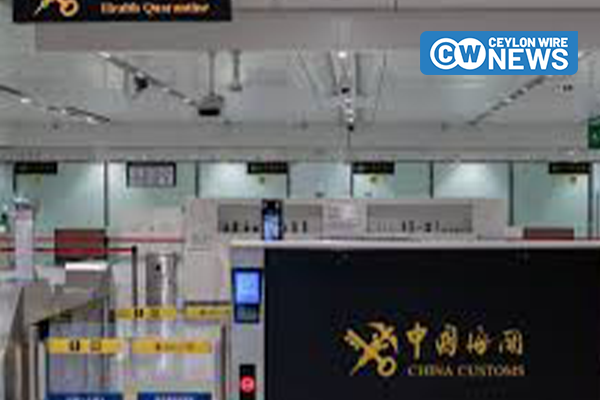
China’s aviation crisis has become a symbol of the country’s broader economic and political isolation, with empty airports, suspended international routes, and mounting airline losses reflecting the consequences of both domestic mismanagement and foreign policy missteps.
The eerie emptiness of China’s airports today is not merely a logistical issue but a telling indicator of deeper structural problems. Once bustling hubs of international travel, facilities such as Beijing’s Daxing International Airport now resemble ghost towns. Social media posts from travellers reveal shuttered shops, deserted terminals, and flights operating with only a handful of passengers. This collapse in air traffic is not an isolated phenomenon but part of a wider trend that underscores the fragility of China’s economy and the limitations of its governance model under the Chinese Communist Party (CCP).
Domestically, the CCP has relied heavily on state-owned enterprises to sustain the aviation industry, yet these carriers Air China, China Eastern, and China Southern have reported staggering losses. In the first half of 2025 alone, combined deficits exceeded 4.7 billion yuan (about 645 million USD). The government’s attempts to stimulate demand through cost-cutting measures have backfired, with airlines reducing services, installing hard seats, and even strapping cargo onto passenger seats. Such practices erode consumer trust and highlight the desperation of an industry caught in a vicious cycle of declining demand and deteriorating service quality. Competition from high-speed rail, which offers cheaper and more reliable alternatives, has further weakened aviation’s appeal. The CCP’s domestic policy of prioritizing infrastructure expansion without addressing consumer confidence has left airlines overextended and unable to adapt.
Foreign policy decisions have compounded these challenges. China’s strained relations with Western nations, exacerbated by the ongoing US-China trade war and geopolitical tensions in the South China Sea, have discouraged international airlines from maintaining routes. By December 2024, more than 30 foreign carriers including Virgin Atlantic, Scandinavian Airlines, and El Al had suspended flights to China. Even Beijing’s unilateral visa-free policy for citizens of 38 countries has failed to reverse the decline. Inbound travel recovery rates remain dismal: only 45.2% from the US, 56.2% from Germany, 57.9% from the UK, and 53% from France as of mid-2025. Shanghai’s figures are even worse, with inbound passengers from Europe, the US, and Australia recovering to just 20–36% of 2019 levels. Meanwhile, neighbouring hubs like Taipei and Hong Kong have rebounded far more quickly, underscoring China’s lagging recovery and diminished appeal.
The CCP’s foreign policy has also alienated potential tourists and business travellers. Strict censorship, reliance on domestic payment systems like WeChat Pay, and the blocking of foreign apps create barriers for visitors. The disappearance of platforms such as Airbnb, combined with mandatory police registration for foreigners, adds layers of inconvenience. Reports of violent attacks on foreign nationals have further tarnished China’s image as a safe destination. These factors collectively discourage international tourism, leaving China isolated despite its attempts at diplomatic charm offensives. Efforts to promote domestically produced aircraft through COMAC, for instance, have been met with skepticism abroad, as regulators remain wary of China’s opaque safety standards.
Financial reports for the first half of 2025 revealed losses of 1.8 billion yuan for Air China (247 million USD), 1.44 billion yuan for China Eastern, and 1.5 billion yuan for China Southern. Collectively, the three carriers lost more than 4.7 billion yuan (645 million USD). Over 30 international airlines including Virgin Atlantic, Royal Brunei Airlines, Qantas Australia, LOT Polish Airlines, and Scandinavian Airlines had suspended routes to China by December 2024. Despite visa-free policies for 38 countries, international arrivals remain far below pre-pandemic levels, leaving airports deserted and tourism crippled.
Critically, the CCP’s back support of the aviation sector reflects its broader governance philosophy: centralized control, heavy subsidies, and political loyalty over market efficiency. While such measures may temporarily sustain industries, they fail to address structural weaknesses. The aviation crisis illustrates how domestic policies focused on control rather than reform, combined with foreign policies that alienate global partners, have left China increasingly isolated. The CCP’s insistence on projecting strength abroad while suppressing dissent at home has created a paradox: a nation with vast infrastructure but dwindling international relevance.
The broader implication is that China’s economic downturn is not simply cyclical but systemic. Empty airports are not just a symptom of reduced travel but a metaphor for the country’s shrinking global engagement. As foreign airlines withdraw and tourists choose alternative destinations, China’s isolation deepens. The CCP’s policies both domestic and foreign have failed to inspire confidence, leaving the aviation industry as a cautionary tale of what happens when political priorities overshadow economic pragmatism.
Sources:
https://thediplomat.com/2025/01/chinas-position-in-the-global-aviation-industry/