
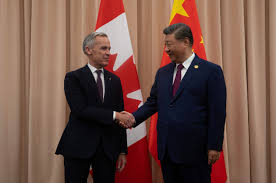
Canada and China are working toward a new strategic partnership that could deliver what Canadian Prime Minister Mark Carney described as “historic” benefits by building on each country’s strengths.
Speaking to Chinese President Xi Jinping on Friday, Carney said the timing was important, as global divisions continue to grow. He urged both sides to focus on sectors where quick and lasting progress is possible, including agriculture, agri-food, energy, and finance.
“This is where we can make immediate and sustained progress,” Carney said.
Carney is the first Canadian prime minister to visit China since 2017. His visit follows months of diplomatic efforts to ease tensions and rebuild relations with Canada’s second-largest trading partner after the United States.
The push to strengthen ties comes amid new strains in Canada–U.S. relations. U.S. President Donald Trump recently imposed tariffs on some Canadian goods and made remarks suggesting Canada could become the 51st U.S. state. China, which has also been hit by U.S. tariffs since Trump’s return to the White House, is keen to deepen cooperation with a G7 country traditionally aligned with Washington.
President Xi welcomed the renewed engagement, saying he looked forward to working with Carney “with a sense of responsibility toward history, our peoples, and the world” to further improve China–Canada relations.
Analysts note that while closer ties with Beijing could influence the wider context of U.S.–China rivalry, Canada is unlikely to shift away from its long-standing alliance with the United States.
“Canada remains a core U.S. ally and is deeply embedded in American security and intelligence structures,” said Sun Chenghao of Tsinghua University’s Centre for International Security and Strategy. “A major strategic realignment is very unlikely.”
However, he added that a more pragmatic Canadian economic approach toward China could signal that U.S.-led efforts to decouple from China are not universally accepted.
Despite renewed optimism, several trade disputes remain unresolved. In 2024, the former Trudeau government imposed tariffs on Chinese electric vehicles, citing unfair advantages created by state subsidies. China responded with tariffs on more than $2.6 billion worth of Canadian agricultural and food products, including canola oil, meal, and seed.
These measures contributed to a 10.4% drop in China’s imports of Canadian goods in 2025. Canadian officials say discussions on easing tariffs are ongoing.