
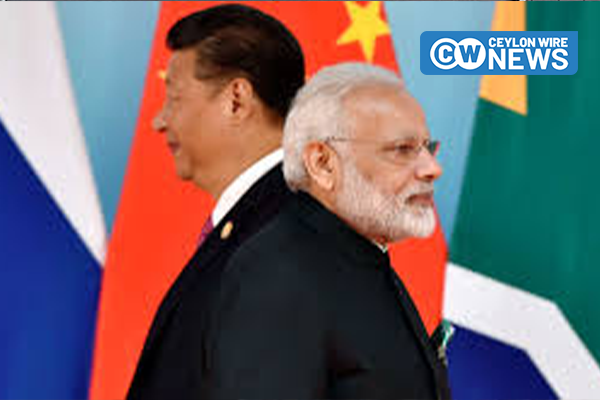
China’s approach to India today is neither contradictory nor improvised. By permitting meetings with the Bharatiya Janata Party (BJP) and its ideological parent, the Rashtriya Swayamsevak Sangh (RSS), Beijing is deploying its united front strategy; a Leninist tactic of co-opting elites and shaping narratives. At the same time, it is salami slicing territory along the Line of Actual Control (LAC) and supporting Pakistan’s strategic posture against India. Taken together, these moves form a coherent design: weaken India internally, erode its sovereignty externally, and box it in regionally.
United Front: Political Engagement as Influence Leninist roots: The CCP’s united front strategy is designed to cultivate interlocutors abroad who normalize China’s rise and mute criticism of its authoritarianism. Engagement with BJP and RSS: By allowing meetings with India’s ruling party and its ideological anchor, Beijing signals openness to dialogue while probing for influence. This is not traditional diplomacy but political infiltration dressed as engagement.
Strategic intent: To soften resistance, exploit India’s pluralism, and create channels that temper India’s responses to Chinese assertiveness. This tactic mirrors Beijing’s outreach elsewhere, from cultivating business elites in Australia to engaging political parties in Nepal.
Salami Slicing: Incremental Encroachment at the Borders. Definition: Salami slicing refers to incremental territorial encroachment—small steps that accumulate into significant strategic gains. Application along the LAC: Road-building in disputed areas, patrols in Ladakh, and encroachments in Arunachal Pradesh alter facts on the ground without triggering outright war.
Legal precedent: International law recognizes territorial integrity as inviolable, yet Beijing’s tactics exploit the absence of binding arbitration mechanisms in the Himalayas. This mirrors China’s South China Sea playbook, where artificial islands and incremental militarization have shifted realities without formal treaty change.
Pakistan: The Proxy Dimension. Military and economic support: China has consistently armed and financed Pakistan, from nuclear assistance in the 1980s to Belt and Roadinvestments today. Strategic purpose:• To keep India distracted on two fronts—western and northern borders. To divide India’s military and diplomatic bandwidth. To cultivate a long-term partner aligned with Beijing’s interests in South Asia. By bolstering Pakistan, Beijing ensures India faces permanent pressure, complicating any attempt to focus solely on the China challenge. Why All Three Strategies Are Deployed Together.
Complementary pressure: Internal influence (united front), external coercion (salami slicing), and regional proxy (Pakistan) reinforce each other. Psychological warfare: Meetings with BJP and RSS cultivate the impression of dialogue, even as border realities shift and Pakistan’s hostility is emboldened.
Strategic timing: After the 2020 Galwan clash, India hardened its military posture and diversified economically. Beijing’s three-pronged strategy seeks to counterbalance these moves. Regional signaling: China demonstrates to other Asian nations that resistance will be met with multidimensional pressure—political, military, and proxy.
Implications for Policy for India: The erosion of sovereignty and regional encirclement demand multidimensional resilience—military vigilance, political awareness, and narrative counter-strategies. For the international community: Beijing’s tactics highlight the limits of existing legal frameworks. The absence of binding dispute resolution mechanisms in the Himalayas mirrors the vacuum exploited in maritime Asia.
For U.S. and allies: Supporting India’s border infrastructure, enhancing intelligence cooperation, and reinforcing democratic resilience are critical to balancing China’s regional ambitions. Beijing’s united front engagement with India’s ruling political forces, salami slicing at the borders, and support for Pakistan are not disparate tactics but parts of a coherent grand strategy. India’s response must be equally multidimensional—combining military vigilance, political awareness, and regional partnerships.
For the wider world, this is a test case: whether international law and collective action can counter a power that advances through infiltration, incrementalism, and proxy leverage.