
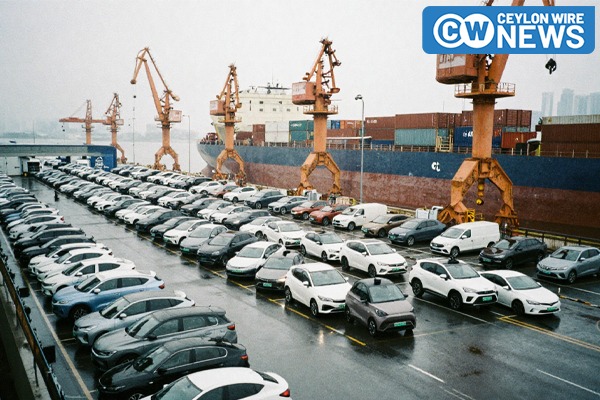
Vehicle imports in Sri Lanka are beginning to moderate after a sharp rise following the reopening of the market, according to analysis by JB Securities.
Data for January showed a slowdown, with registrations declining further by 3,683 units in February, indicating easing demand.
Total vehicle imports dropped to $236.4 million in January 2026 from a record $311.1 million in December, driven largely by a sharp correction in private vehicle imports, which fell from $240.9 million to $163.8 million — a 32% decline month-on-month.
JB Securities CEO Murtaza Jafferjee noted that while February external sector data is yet to be released, the Central Bank’s purchase of $461 million from the foreign exchange market suggests a strong current account surplus, with reduced vehicle imports likely contributing to the trend.
Registration data reflects a similar pattern. Total vehicle registrations fell from 55,365 units in January to 51,682 in February, while car registrations declined from 4,648 to 4,163 units.
However, Jafferjee cautioned that registration figures may not fully reflect actual consumer demand.
He explained that a government regulation imposes a 3% monthly penalty on the CIF value of vehicles not registered within 90 days of import, prompting some dealers to register vehicles early to avoid additional costs.
Market data also shows a shift in consumer preferences, with growing demand for compact and used vehicles, particularly in the small-engine category.
Japanese vehicles continue to dominate imports, while China and India are gradually expanding their presence in the electric vehicle segment.
Electric and hybrid vehicles remain significant market segments despite the slowdown.
The motorcycle segment continues to account for the highest volume in the market, supported by the rising popularity of electric models and increased participation from Chinese manufacturers.
Analysts note that while the current growth cycle is notable, it remains below the surge seen in 2015 following tax changes. Demand patterns have also evolved, with increased interest in SUVs and crossovers over traditional passenger cars.
Meanwhile, three-wheeler registrations have improved from recent lows but remain below historical peak levels.