
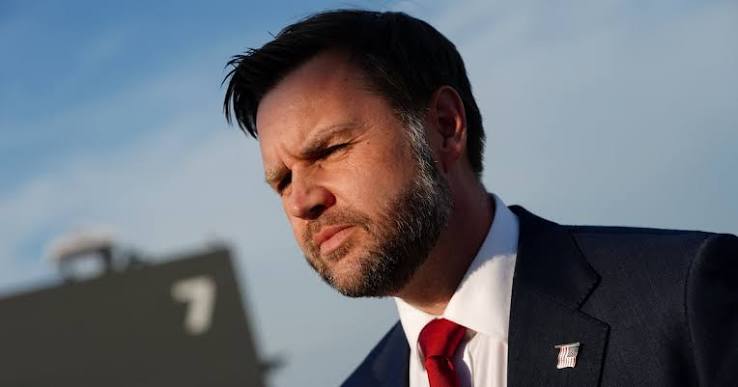
US Vice President JD Vance has said Iran must make a “meaningful” reduction in its nuclear enrichment capacity to meet US demands and reach an agreement to end the seven-month war between the two countries.
In an exclusive interview with Reuters, Vance said any agreement would require concrete Iranian concessions on nuclear enrichment rather than assurances about future reductions.
“If you don’t want a nuclear weapon, then why do you need 60% enriched fuel?” Vance said, arguing that a reduction in highly enriched uranium production would demonstrate Iran’s commitment to not developing nuclear weapons.
Iran and the United States have exchanged proposals in recent weeks aimed at ending the conflict and reopening the Strait of Hormuz, a major global energy shipping route. US President Donald Trump rejected Iran’s latest proposal and has warned that military operations could intensify after the November midterm elections.
Vance said Washington remained open to an agreement but would require concrete action from Tehran.
“We’re not going to trade words for actions,” he said.
Vance also said the United States remained uncertain about how decisions are made within Iran’s political system.
He said Washington was communicating with Iranian President Masoud Pezeshkian and Foreign Minister Abbas Araqchi, but questioned how much authority they have within Iran’s broader power structure following the reported killing of Supreme Leader Ayatollah Ali Khamenei in US-Israeli strikes at the beginning of the war.
“One of the things we picked up on is it’s not totally clear how their country makes decisions,” Vance said.
Iranian Foreign Ministry spokesperson Esmaeil Baghaei rejected the claim, saying US officials are aware of Iran’s decision-making system and their Iranian counterparts. He said the problem was instead the “contradictory positions and mixed messaging” from US officials.
Vance also said he had spoken with field commanders to assess conditions on the ground. He dismissed concerns about critical munitions shortages and said Iranian forces were still able to periodically target commercial vessels in the Strait of Hormuz, although they were largely unable to prevent energy exports through the waterway.
The conflict, which Vance said costs around $3 billion a month, has also become a political issue ahead of the US midterm elections, with higher energy prices putting pressure on President Trump and Republican candidates.
Speaking in Alaska during a campaign trip, Vance also said he had not decided whether to seek the presidency in 2028.
“I really haven’t thought about it much,” he said.
Source: Reuters