

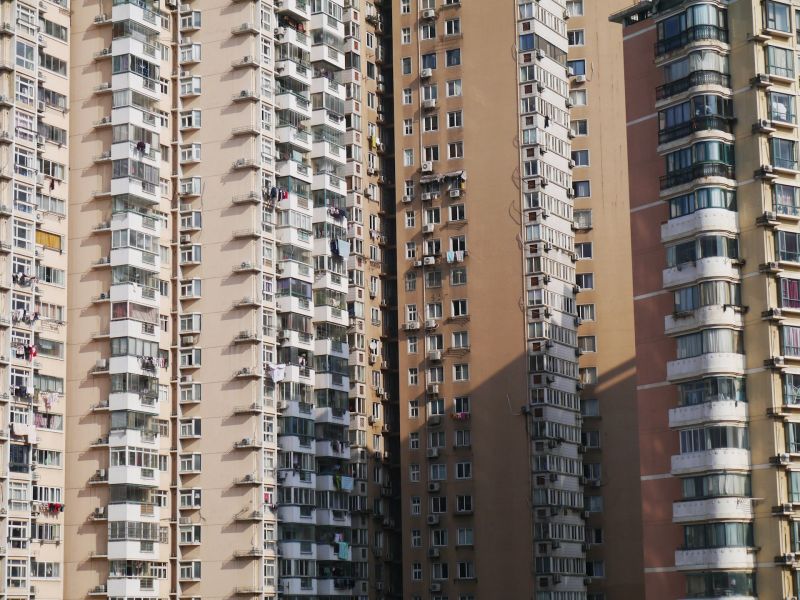

The housing sector in China has begun to stabilize over the last few months after being a troubled sector since 2021. The sector, after experiencing a sharp fall in new house production due to a prolonged property market slump, has witnessed a recent phenomenon of a significant rise in the share of second-hand home transactions in overall housing transactions. From 27 percent in 2020 to more than 50 percent in 2026, the share of second-hand home sales has become gigantic.
This sounds like a relief, with the housing market entering a seemingly stabilization phase. However, a sceptical pair of eyes find something unsettling in how Chinese officials frame it as the market entering a “new phase”.
First things first, the new phase doesn’t change some of the macroeconomic vitals. The rise in second-hand housing still implies that the investment slump remains. With property investment projected to shrink by about 20 percent over the year, with new residential construction having sharply reduced, making stabilization difficult anytime soon.
Second, second-hand housing is merely a transfer of ownership and not new production. Hence, the rise in the second-hand housing market might be a relief; it doesn’t contribute to the GDP. GDP estimation measures newly produced goods and services in a given period, and as the physical structure of existing homes was already accounted for when it was originally built, reselling it is just an ownership transfer. The services associated with the sale of second-hand housing, such as brokerage fee, might be added to the GDP estimates. But, new residential construction, which adds heavily to the estimates, is shrinking, thereby pushing down growth. It has deeper fiscal consequences. As the economy for decades was fuelled by land sales, construction projects, employment, and demand for basic industry goods like steel and cement, it has seen a slow and steady downturn. This downturn further impedes GDP growth.
Third, it is well-established that the Chinese government has mastered the craft of information shaping and management. In a similar vein, the housing resale information disseminated by officials as a “new phase,” hoping for stabilisation, is rather hollow.
The rise in house resale has a direct implication on new house construction. It implies that individuals are not incurring investment expenditure on new housing either due to lack of disposable funds or the lack of trust in the markets. A 52 percent rise in second-hand houses implies that there is a drastic slump in the fresh housing market. This is similar to celebrating savings during a recession: rising numbers due to not-so-celebratory reasons.
The market is unstable, and that is what buyers fear, making them highly risk-averse in the fresh housing market. The Chinese pre-sale model, which involved paying for houses years before completion, is an example of market failure. With money locked in for a long period, home buyers found themselves in as unwilling creditors to the building companies. This created an adverse selection-kind problem for the home buyers. Whenever the developers failed, buyers found themselves with home loans against unfinished projects. This led to two subsequent consequences. First, a housing market crash. Second, elimination of the adverse selection problem by the homebuyers, through purchase of existing properties over what is still in the conception phase. The rampant episodes of adverse selection have made buyers highly risk-averse, and this in turn has a bearing on reducing housing investments as a part of GDP. Households with their wealth locked in upcoming properties face severe setbacks with the rise in resale.
On the contrary, the officials are portraying these gaping issues as a structural upgrade. This information dissemination for an image make-over on the domestic and international front needs to be scrutinised. Rising sales of second-hand housing are a structural issue that rises due to high levels of fear and low appetite for risk. The “new phase” is a logical response to an old problem of oversupply.
An economy can dump its overproduction of tradable goods to other countries and mitigate the outcomes, but when it comes to non-tradables, like housing and construction services, it has to bear the direct burden.