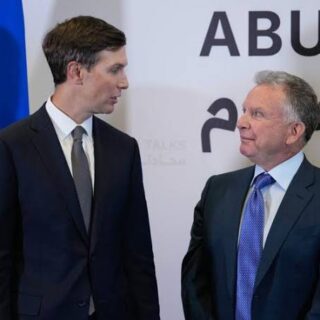

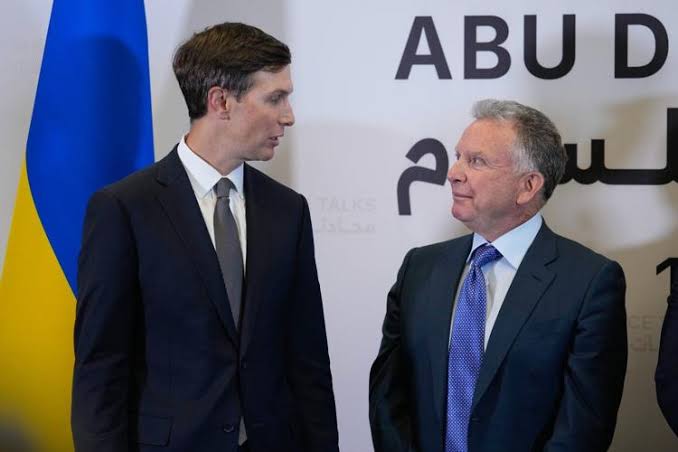
Russia and Ukraine have agreed in principle to carry out a major prisoner exchange following two days of US-mediated peace talks in Abu Dhabi, although significant differences remain over key issues, particularly territorial disputes.
The agreement was reached during the first round of negotiations between the two countries in nine months. Officials said the number of prisoners to be exchanged would be determined on Thursday.
US envoy Jared Kushner described the proposed exchange as the “biggest humanitarian release of prisoners” since the war began, while Ukrainian President Volodymyr Zelenskiy said the exchange would be significant.
Both sides reported progress during the discussions and agreed to continue negotiations. However, no major breakthrough was announced on the central issues preventing a peace agreement.
Kushner, who is also US President Donald Trump’s son-in-law, said American mediators were working to address the interests of both countries and expressed confidence that a pathway towards peace could be found.
He acknowledged that there was currently little trust between the two sides and that territorial disputes would be among the most difficult issues to resolve.
“I think this was a good first step,” Kushner said.
Kushner and fellow US envoy Steve Witkoff are scheduled to travel to Moscow on Thursday for talks with Russian President Vladimir Putin. They also plan to discuss the possibility of including European representatives in future negotiations.
The US envoys are then expected to travel to Ireland to meet Zelenskiy, who is attending a gathering of European leaders.
Speaking to reporters in Dublin, Zelenskiy said Ukraine was focused on making progress towards an agreement this year. He also stressed the importance of the upcoming discussions between the United States and Russia.
Ukrainian negotiator David Arakhamia described the Abu Dhabi discussions as difficult, saying Russia’s delegation had arrived with strict instructions. However, he said the talks had created positive momentum towards reaching a solution before the end of the year.
European officials and NATO representatives also met US and Ukrainian envoys in Abu Dhabi, although Russia’s delegation declined to meet them. Arakhamia said future negotiations should include European countries.
Russia’s chief negotiator, Vladimir Medinsky, said he believed a peace agreement was getting closer but that much would depend on Ukraine, the United States and Europe’s position.
He also reiterated Moscow’s territorial demands, saying that “every inch” of Russian land must be returned. The statement appeared to refer to Putin’s demand that Ukraine surrender the entire eastern Donbas region, a proposal Kyiv has strongly rejected.
Meanwhile, Ukraine had hoped the discussions would produce progress towards a ceasefire involving Black Sea grain shipments. However, Ukrainian Foreign Minister Andrii Sybiha said Kyiv was still waiting for a response from Russia.
Fighting Continues Despite Peace Negotiations
Military attacks continued overnight despite the negotiations in Abu Dhabi, with both countries accusing each other of launching strikes.
Ukrainian officials said Russian forces had struck six electricity substations in central Ukraine, while an attack on a market in the Odesa region killed three people.
In Russia, local officials reported that a Ukrainian drone attack killed one person in the Belgorod region.
Russian forces currently control about one-fifth of Ukraine, including territories captured before the full-scale invasion in February 2022. Their battlefield advances have slowed this year, while both countries continue attacks on military and infrastructure targets.
Russia has also called for a broader agreement on European security arrangements before addressing the specific details of the war. Moscow previously demanded the withdrawal of NATO forces from countries that joined the alliance after 1997, a proposal rejected by NATO.
European officials have maintained that wider security discussions should take place only after a ceasefire and that Russia should not be allowed to dictate Europe’s security arrangements.
US President Donald Trump has repeatedly expressed optimism about reaching a peace agreement, recently describing the possibility of a “big beautiful agreement” that could include security guarantees for Europe.
However, despite the latest diplomatic engagement, major disagreements over territory and security arrangements continue to complicate efforts to end the conflict.
Source: Reuters