
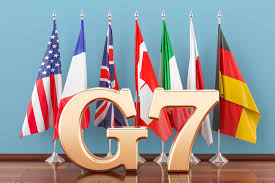
Finance ministers from the Group of Seven (G7) countries are set to discuss a possible coordinated release of petroleum from strategic reserves during an emergency meeting on Monday, aimed at addressing the sharp rise in oil prices following the conflict in the Gulf.
The ministers will hold a call at 8.30 a.m. New York time with Fatih Birol, Executive Director of the International Energy Agency (IEA), to assess the impact of the war involving Iran, according to officials familiar with the discussions.
Sources indicate that at least three G7 countries, including the United States, have expressed support for a coordinated release of oil reserves.
The 32 member countries of the IEA maintain strategic oil reserves as part of a collective emergency system designed to respond to global energy crises. Some US officials believe a joint release of between 300 million and 400 million barrels — about 25 to 30 percent of the 1.2 billion barrels held in public reserves — could help stabilise markets.
The meeting comes as US President Donald Trump faces increasing pressure to curb the rapid rise in oil prices since the start of the conflict. The average petrol price in the United States rose to $3.45 per gallon by Sunday, compared to $2.98 a week earlier, and could rise further if the trend continues.
The surge in oil prices has triggered global economic concerns, raising fears of a renewed inflation shock that could slow economic growth worldwide.
Major crude oil importers such as China, India, South Korea, Japan, Germany, Italy and Spain are particularly vulnerable to price volatility.
Brent crude, the international benchmark, surged by 24 percent in early Asian trading on Monday to $116.71 per barrel before easing to around $110.85, still nearly 19 percent higher. West Texas Intermediate, the US benchmark, rose by 28 percent to $116.45 before settling at around $108, also up about 19 percent.
Strategic petroleum reserves were first established with the creation of the IEA in 1974 following the Arab oil embargo, which caused severe fuel shortages and sharp price increases across Western economies.
These reserves allow major oil-consuming nations to respond collectively to severe supply disruptions. Since the IEA’s creation, member states have coordinated five emergency releases of oil stocks, including two in 2022 after Russia’s invasion of Ukraine triggered a surge in prices.
The IEA recently held an emergency meeting to review options for addressing a potential supply crisis. A document prepared for the meeting stated that the agency stands “ready to act to support the stability of oil markets.”
The document also noted that IEA countries currently hold more than 1.24 billion barrels of public oil reserves, in addition to roughly 600 million barrels of industry-held stocks that could be mobilised if needed.
Together, these reserves could cover nearly one month of total oil demand in IEA countries and more than 140 days of net imports. The United States and Japan account for around 700 million barrels of the total public reserves.
The surge in oil prices poses a challenge to President Trump’s pledge to reduce inflation and lower energy costs. He has already faced criticism from some Republican figures who argue that he has focused too heavily on foreign policy rather than domestic economic issues.
Responding to concerns on Sunday, Trump wrote on social media that the rise in oil prices would be temporary and justified by security concerns.
“Short term oil prices, which will drop rapidly when the destruction of the Iran nuclear threat is over, is a very small price to pay for U.S.A., and World, Safety and Peace,” he said.
Financial markets also reacted to the oil price spike. Stock markets across much of Asia declined on Monday, while US equity futures signalled potential losses as investors reacted to rising energy costs.
The consideration of releasing strategic petroleum reserves represents a shift in position for the Trump administration, which had previously indicated that such measures would not be necessary to stabilise markets.
However, energy analysts say the unprecedented surge in oil prices has left policymakers with limited options.
Qatar’s Energy Minister Saad al-Kaabi warned in an interview that the conflict could have severe economic consequences and potentially disrupt global energy production.
Analysts at Rapidan Energy Group also noted that IEA member countries are likely to face increasing pressure to release oil reserves to calm markets.
Meanwhile, China — which is not a full member of the IEA — has also built up significant strategic oil reserves over the past year. Analysts estimate that China currently holds between 1.1 billion and 1.4 billion barrels of oil, enough to cover approximately 140 days of its oil import demand.