
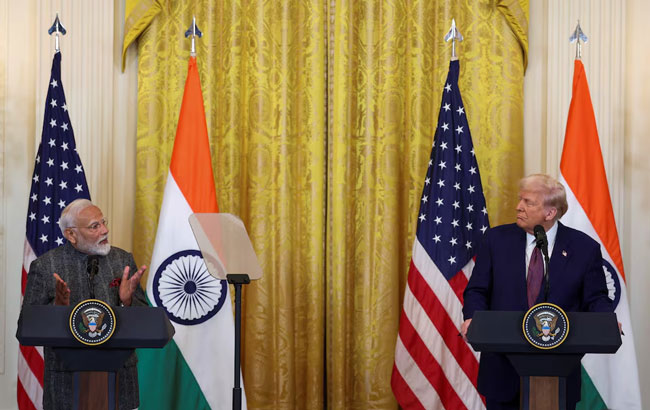
India’s long-anticipated trade agreement with the United States—under which Washington will cut reciprocal tariffs to 18 per cent and India will halt oil purchases from Russia while committing to buy US$500 billion worth of American energy and technology products—will be signed by mid-March, Commerce Minister Piyush Goyal said on Thursday.
He added that a joint statement outlining key aspects of the agreement will be issued within five days, although details of its contents were not disclosed.
Earlier, sources told NDTV that full details of the deal—demanded by opposition parties angered by the lack of transparency around negotiations—will be shared at a later stage.
The same sources stressed that India’s price-sensitive dairy and fisheries sectors, as well as farmers, have been adequately protected from American imports. They also pointed to trade agreements signed in 2025 with Oman, the United Kingdom, New Zealand, and the European Union, noting that no concessions were made in those deals either.
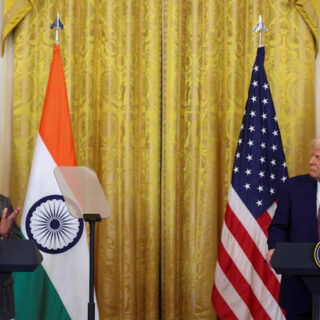
The agreement was announced on Monday night by US President Donald Trump via Truth Social and is seen as a first step toward a broader bilateral trade framework, with expectations that India–US trade could reach US$500 billion by 2030.
Negotiations had reportedly stalled earlier after Washington sought access to India’s agriculture and dairy markets—sectors that support millions of livelihoods. Indian officials made it clear these concessions were not on the table.
Following Trump’s announcement, opposition parties criticised the lack of clarity on key issues, including implementation timelines and alternative oil sources. India imported nearly 21 million barrels of oil in 2025, according to tracking firm Kpler.
Protests by opposition lawmakers also disrupted parliamentary proceedings, frequently interrupting Goyal’s Lok Sabha address on the deal. In the brief moments he was heard, the minister said the agreement would strengthen domestic manufacturing and design while creating new opportunities for India’s struggling MSME sector.
He also noted that India’s revised reciprocal tariff rate would now be lower than that imposed on any other major exporting nation to the United States.
Source: NDTV