

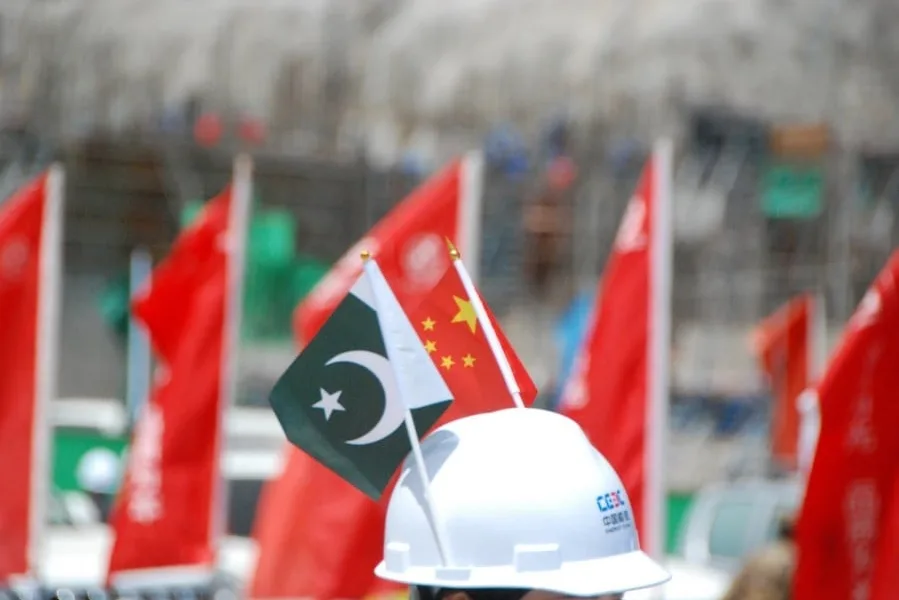
According to an analysis by Imran Khurshid for the Middle East Forum, Pakistan’s deepening ties with China are playing a key role in expanding Beijing’s influence in the region’s defense markets.
Pakistan has significantly increased its involvement in the Middle East, highlighted by the strategic defense pact signed with Saudi Arabia in September 2025. This agreement treats an attack on one party as an attack on both. While Pakistan has long-standing connections in the region, recent geopolitical shifts have amplified its importance. A critical factor in this evolution is Pakistan’s close integration with China, particularly in defense, security, and intelligence cooperation.
Data from the Stockholm International Peace Research Institute (SIPRI) indicates that over 80% of Pakistan’s arms imports from 2021 to 2024 originated from China. This reflects substantial reliance on Chinese systems, even as Pakistan maintains some U.S.-origin platforms like F-16 jets. Pakistan is actively marketing Chinese co-produced equipment, most notably the JF-17 fighter jet, along with drones, HQ-9 air defense systems, and other military hardware.
Reports highlight Pakistan’s defense outreach to various nations, including Iraq, Bangladesh, Indonesia, Saudi Arabia, Libya, Morocco, Nigeria, Sudan, and Ethiopia. Chinese state media has prominently covered potential JF-17 deals. These systems are being showcased through exhibitions, diplomatic engagements, and joint initiatives.
A notable example is the discussed possibility of supplying JF-17 jets to Saudi Arabia in connection with financial support from Riyadh. While such a deal has not yet been finalized—due to questions about Chinese weapon quality, compatibility with Western systems, and cost—Pakistan’s efforts effectively serve as a conduit for China to introduce its defense products into the Middle Eastern market.
In the evolving post-U.S.-Iran agreement landscape, Pakistan has deployed assets to Saudi Arabia, including JF-17 jets, under their pact. This deployment increases the regional visibility of Chinese-origin systems.
A concrete case is Pakistan’s reported $4 billion-plus deal with the Libyan National Army for 16 JF-17 fighters and additional equipment. This arrangement allows China to expand its presence indirectly while sidestepping direct scrutiny, though it has drawn criticism for possibly violating UN arms embargoes and affecting Libya’s internal dynamics.
Beyond individual sales, these deals foster long-term dependencies through maintenance, training, spares, and logistics—embedding the broader Chinese defense ecosystem. China has also promoted its platforms aggressively, including through narratives about their performance in past India-Pakistan conflicts.
If concepts like a proposed “Islamic NATO” involving Pakistan and others advance, it could further open markets for Chinese systems. In the wake of shifts involving Iran, Beijing may intensify arms flows, building networks of interoperable partners rather than relying solely on direct involvement.
This rewritten summary draws from the original article by Imran Khurshid, published on July 2, 2026, at the Middle East Forum (meforum.org). The piece underscores how Pakistan’s military alignment with China positions Islamabad as a strategic enabler for Beijing’s defense ambitions in the Middle East.