

Pakistan’s powerful army has realised over time that it need not govern directly to exercise power. There were pitfalls. It was made accountable for the failures of the governance and wrong decisions. So a new arrangement has come into existence, where civil politicians occupy government offices, formulate policies as well as face public anger, while the military holds the reins of power, allowing it to retain a decisive influence over strategic affairs and expand its economic interests.
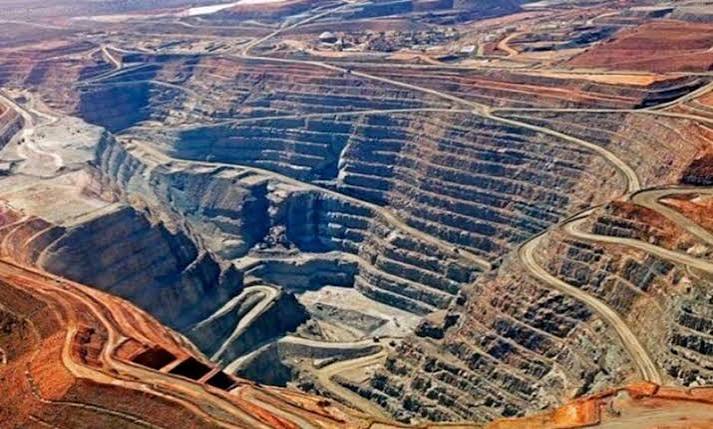
The exploitation of minerals in Khyber Pakhtunkhwa and other provinces illustrates the new arrangement. Army-linked organisations are directly involved in mineral extraction, allowing army officials and the elite to reap huge profits. At the same time, public queries about mining contracts, operations, royalties, income generation, and exports remain unanswered. Nobody in Pakistan can question its army. Neither the civil government nor the judiciary. Leave the common people alone.
The Special Investment Facilitation Council (SIFC), a hybrid civil-military economic body, was formed to fast-track investment in the country. However, it has acted beyond its stated objective and appears to be favouring the military’s formal, institutionalised role in economic decision-making and business governance, even though the civil government remains at the forefront. As a military-linked organisation receives special treatment, transparency becomes particularly important.
The Frontier Works Organisation (FWO), a military engineering organisation, has received a contract to operate the Muhammad Khel copper mine in Khyber Pakhtunkhwa. So concerns are being raised if Pakistan’s natural resources are being extracted for the benefit of the public or for the powerful institutions of the military. No government records have furnished details about the quantity and value of copper recovered from the mines. There is a clear clash between the province’s economic interest and military-linked commercial activity.
The Pakistani masses would never know how much profit the military linked organisation earned. Notably, FWO is entitled to receive 50 percent of the profit earned from North Waziristan’s Muhammad Khel copper mine. These are substantial commercial interests, even though the public would never know the actual revenue generated. Why would institutions like the army need to get into such activities when the country can attract private players from Pakistan and abroad. This would not only make things transparent but would lead to higher collections for the state’s exchequer.
In other words, the army officials have direct commercial interests. This must compel average Pakistanis to think about what kind of role the army is playing in the country’s economic growth. Whether the country is getting benefitted or just a coterie of army officials do– this question remains shrouded in clouds of deep suspicion. Nobody knows how much copper and other minerals were extracted, what revenue was generated and how much was exported by the military linked mining organisation.
After a lawyer approached the Peshawar High Court over the public being kept in the dark, the government released some figures on Khyber Pakhtunkhwa’s mineral sector. However, there was a mismatch between the income generated and taxes or royalties the government received. The Awami National Party (ANP) questioned allocation of large mines to FWO, even as it expressed concerns over the displacement of people from mineral resources-rich areas by the army under the pretext of military operations.
Ideally, the spotlight should have been on the military for doing something that was ethically wrong and created conflict of interest. However, the provincial government of Khyber Pakhtunkhwa and the federal government of Pakistan received the blame. The Standing Committee on Minerals slammed the Minerals Department over the discrepancies in mining operations and lease allocations.
It looks clear that the military has managed to evade the scrutiny and accountability. The military-linked commercial organisations are receiving direct access to valuable public resources without the required transparency. On the other hand, the government is deprived of due taxes and income, while politicians and the bureaucracy face criticism. It is a perfect failure of democratic accountability under a civil–military imbalance.
The army had learnt hard lessons during its rule under General Zia-ul-Haq and General Pervez Musharraf that governing the country directly can be politically expensive. So the current dispensation has chosen to stay away from the position of president and prime minister. This has not only allowed it to continue considerable influence over national security, strategic decisions and ensure commercial gains, but also facilitated the redirection of public anger toward the feeble civilian setup.