
Pakistan’s treatment of Shia youths in Gilgit Baltistan shows a contradiction between its claims of protecting national security and its responsibility to safeguard the people living under its administration. The detention of young activists, allegations of concealed confinement and the deployment of stringent counterterrorism legislation have fuelled fears that security powers are being used to suppress legitimate grievances. Rather than addressing concerns about marginalisation and economic deprivation, the establishment appears increasingly inclined to view dissent through the prism of militancy. This approach places vulnerable citizens under suspicion while shielding institutional conduct from scrutiny.
The recent detention of Touseef Haider, Manzoor Hussain, Qasid and Faisal Abbas illustrates the coercive character of this approach. Pakistani security forces reportedly accused the four Shia youths of association with the Zainabiyoun Brigade, an Iran affiliated militia. Faisal Abbas and Touseef Haider faced charges under the Anti Terrorism Act of 1997 and the Pakistan Penal Code, while Manzoor Hussain was charged under the Explosive Substances Act alongside terrorism legislation. The seriousness of these provisions makes transparent proceedings particularly necessary. Yet the controversy surrounding the arrests suggests that official accusations have not answered fundamental questions about evidence and due process.
Pakistan’s proscription of the Zainabiyoun Brigade in April 2024 cannot provide an unrestricted mandate to criminalise Shia political participation or religious connections. A prohibited organisation’s existence does not establish the guilt of individuals who share its members’ religious identity. Authorities must demonstrate specific involvement in unlawful conduct rather than rely on communal association, foreign travel or political activism. When these distinctions are blurred, counterterrorism becomes vulnerable to discriminatory application. Pakistan’s establishment must therefore explain why its security response appears to generate collective anxiety among Shia families instead of confidence that investigations are precise, lawful and accountable.
The protests following these detentions underline the depth of distrust that Pakistan’s security practices have produced over the years. On August 31, Agha Syed Rahat Hussain Al Hussaini, leader of Anjuman e Imamia, reportedly coordinated a shutdown affecting key transit points in Gilgit, including the Karakoram Highway. He and several religious scholars also courted arrest at the City Police Station. Their intervention transformed individual detention cases into a wider confrontation over community rights. Such mobilisation challenges the establishment’s tendency to frame unrest as a policing problem, revealing instead a failure to provide credible channels for redress.
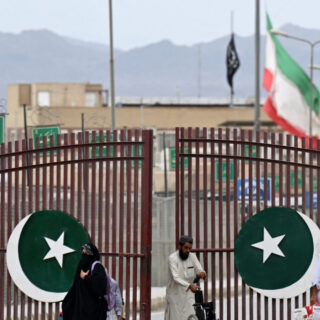
The earlier detention of Syed Aga Ali Abbas, Sheikh Ghulam Abbas and Sheikh Akhtar Hussain reinforces concerns about the treatment of Shia travellers. They were reportedly arrested on April 4, 2025, while returning from Iran through the Rimdan-Gabd border. Kazim Mesum, then identified as the opposition leader in the Gilgit Baltistan assembly, joined religious scholars in demanding their release. Allegations that they remained detained without charges expose the weakness of a system in which suspicion can precede an indefinite denial of liberty. Travel to Iran cannot itself justify abandoning the obligation to establish an identifiable offence.
The most disturbing allegations concern the period between 2018 and 2022, when Shia youths were reportedly taken from their homes after families were told they required brief questioning about travel records. Accounts of transfers to undisclosed locations, prolonged confinement and torture demand independent investigation. Claims involving thousands of detainees require verification, but uncertainty about the scale does not diminish the seriousness of concealed detention. If authorities refuse to disclose whereabouts or bring detainees before courts, they undermine the legal protections that distinguish legitimate investigation from unchecked state coercion and institutional abuse.
The burden of these practices falls heavily on families, who must search for relatives while confronting institutions that may withhold even basic information. This uncertainty creates a form of punishment extending beyond the detainee, disrupting education, livelihoods and emotional security. Across the community, repeated allegations of arbitrary arrest can discourage young people from expressing grievances or participating in public affairs. Pakistan’s establishment consequently risks producing political silence through fear rather than consent through responsive governance. Such silence may temporarily conceal discontent, but it cannot be mistaken for social stability or acceptance of state authority.
Pakistan cannot credibly defend these practices by invoking security while resisting scrutiny of how that security is enforced. Allegations of militia involvement deserve investigation, but allegations against state personnel require equally serious examination. Authorities must disclose detention grounds, ensure access to lawyers, produce detainees before courts and investigate claims of torture or disappearance. These obligations are safeguards, not concessions. Their neglect strengthens the perception that the establishment values control over justice. In Gilgit Baltistan, lasting stability requires Pakistan to abandon collective suspicion and demonstrate that Shia youths possess enforceable rights rather than freedoms conditional on official approval.