
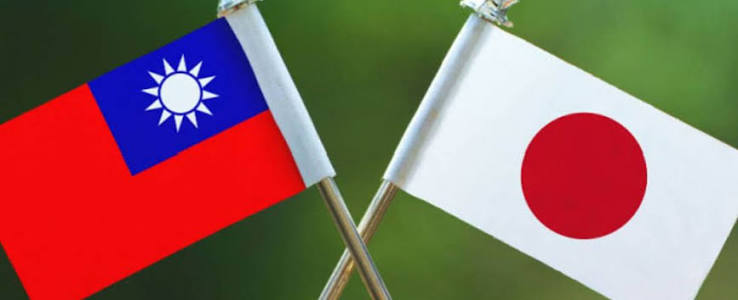
The prospect of a Chinese invasion of Taiwan is no longer a remote contingency. It is a scenario openly rehearsed in Beijing’s military exercises and embedded in its political doctrine. For Taiwan, survival depends not only on its own resilience but on the strength of its alliances. Among potential partners, Japan stands out as the most proximate, capable and politically aligned actor. Taiwan must therefore deepen its defence linkages with Japan, not as a symbolic gesture, but as a strategic necessity.
Shared Geography, Shared Security
Taiwan and Japan are bound by geography. The Ryukyu Islands stretch from Kyushu down toward Taiwan, forming a natural corridor through which any Chinese military operation would pass. If Taiwan were to fall, Japan’s southern flank would be exposed, its sea lanes threatened and its security architecture destabilized. Conversely, if Japan were to falter, Taiwan would become isolated. Their fates are intertwined, and their defence must be as well.
Japan’s Strategic Position
Japan has undergone a profound shift in its security posture. Its new defence strategy explicitly identifies China as the greatest challenge to regional stability. Tokyo is expanding its military budgets, investing in counterstrike capabilities and strengthening its Self-Defense Forces. Unlike other partners, Japan has both the proximity and the political will to act quickly in the event of a crisis. Its bases in Okinawa and its naval assets in the East China Sea are positioned to provide immediate support.
Why Taiwan Needs Japan
Japan can respond more rapidly than other partners. Its forces are geographically closest to Taiwan, allowing them to intervene faster than U.S. assets stationed further afield. A closer Taiwan-Japan defence framework would strengthen deterrence by complicating Beijing’s calculus and raising the costs of aggression. Japan’s Maritime Self-Defense Force can help secure Taiwan’s maritime lifelines, ensuring energy and food supplies during a conflict. Closer defence ties would also send a clear message to Beijing that Taiwan is not isolated, reinforcing deterrence through solidarity.
The Path Forward
Taiwan and Japan must move beyond informal cooperation. They should pursue regular joint exercises to improve interoperability between their forces, expand intelligence sharing on Chinese military activities, develop coordinated logistics and contingency planning for a prolonged conflict, and establish legal frameworks that would facilitate the rapid deployment of Japanese forces in support of Taiwan’s defence.
Conclusion
Taiwan cannot afford to rely solely on distant allies. Its survival depends on forging a defence partnership with Japan that is as practical as it is political. For Japan, defending Taiwan means defending itself. For Taiwan, linking arms with Japan is the clearest path to deterrence. The time for ambiguity has passed. The time to deepen practical defence cooperation is now.