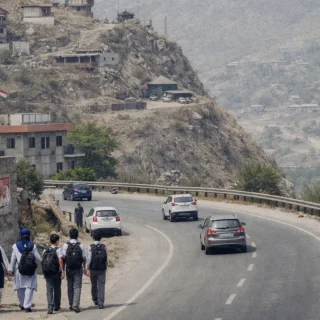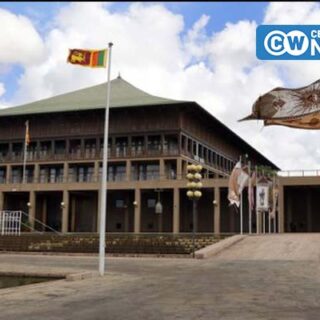

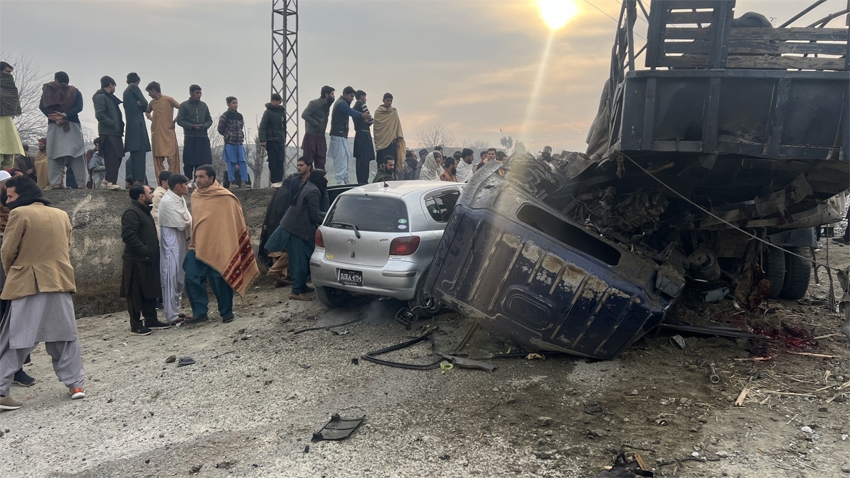
South Asia has been politically animated in the last couple of years with peoples-led movements toppling governments – in Sri Lanka, Bangladesh and Nepal. Focusing on Bangladesh and the case of Tarique Rahman, Sangita F. Gazi examines how Western powers play an important and unreliable role in fragile democracies, with inconsistent, self-centred and unpredictable diplomatic manoeuvres and alignments.
The current political trajectory in Bangladesh has brought the spotlight back to the longstanding conundrum surrounding the international community’s role in fragile democracies. For the last two decades, Western nations and multilateral bodies have assumed the uninvited role of guardians of democratic accountability, the rule of law and anti-corruption efforts in Bangladesh. However, the same international institutions now appear to be accomplices — either by passive approval or changed diplomatic policies — in the reinstatement of political leaders they once condemned. The case of Tarique Rahman, the exiled Chairman of the Bangladesh Nationalist Party (BNP) is a case in point.
Tarique Rahman and the West’s Political Realignment
The noughties saw Tarique Rahman at the centre of multiple accusations relating to corruption and political violence, both at home and abroad. The Federal Bureau of Investigation (FBI) and other investigative bodies in North America and Europe examined networks associated with illegal financial dealings linked to his political activities.
Frequent mention in Western diplomatic cables and risk analyses relating to the then BNP–Jamaat-e Islami (JMI) led government evaluated the corruption, rent-seeking practices and suspected sponsorship of extremist forces as key factors of instability in Bangladesh. For instance, in a leaked cable, former Ambassador of the United States to Bangladesh Patricia Butenis characterised the problematic Tarique’s ‘youthful arrogance’, and claimed that many within the BNP were once ‘threatened and surveilled by intelligence services’ for opposing him. The former Political and Economic Counsellor D.C. McCullough highlighted Tarique’s operation of a ‘shadow government’ from his ‘Hawa Bhaban’ (the colloquial term used to refer to his primary place of business), particularly concerning the government’s procurement of contracts and appointments.
Another diplomatic communication revealed that Ambassador James F. Moriarty sought a 212(f) entry ban on Tarique’s entry to the United States, reiterating his notoriety for ‘demanding bribes’, ‘egregious political corruption’, ‘flagrant disregard for the rule of law’, and contribution to harbouring a ‘potent ground for terrorists’ in Bangladesh. His conduct was believed to have had ‘deleterious effects’ on US interests and the stability of democratic institutions. On another occasion, the US Department of Justice had to intervene to forfeit US assets connected with Arafat Rahman ‘Koko’ — the brother of Tarique Rahman, to launder money in the US and/or its financial institutions.
There were allegations of Tarique Rahman’s complicity and conspiracy over the 2004 grenade attack on Sheikh Hasina’s political rally — a grotesque assault that killed 24 and wounded hundreds of Bangladesh Awami League leaders and activists and brought Bangladesh’s crisis of impunity into sharp international focus. Soon after the attack, another leaked diplomatic cable questioning the political will of the then-BNP government to conduct a credible investigation into the incident laid bare the growing frustration of the US Embassy in Dhaka. The cable referred to the then government’s hesitation to conduct a fair investigation into the grenade attack as a ‘deflection’ strategy, noting that ‘[Dhaka] is getting inventive in explaining why they cannot investigate the August 21 attacks’. The remark, captured with bureaucratic restraint, was in truth a portrait of state complicity in political violence disguised as paralysis.
Intriguingly, since the political realignment that followed the fall of the Sheikh Hasina government in August 2024, the strategic interests of Western powers in Bangladesh have also adjusted accordingly. Rahman, previously seen as a ‘symbol of kleptocratic government and violent politics’, is now being portrayed as a viable political partner and a possible future Prime Minister of Bangladesh.
The resumption of Tarique Rahman’s political relevance represents a pragmatic adjustment in foreign policy rather than a change in moral assessment. Meanwhile, the local judiciary, complicit with right-wing forces, quashed the earlier conviction in which the Court sentenced Tarique to life imprisonment (and others to varying degrees of punishment) for their complicity in the ‘state-backed’ grenade attack case. The vacation of the verdict has left the victims’ families without any hope for justice. The hasty dismissal and acquittal also brings to the surface Bangladesh’s long struggle to end the culture of impunity and break the perpetuating cycle of political retribution.
Western Dualism
The shifting narrative around Rahman reflects a deeper contradiction in international action toward Bangladesh: an incongruity between normative principles and political realism. In the past, the West justified their actions toward Bangladesh’s politics — whether, for instance, through aid conditionality, governance programs or diplomatic pressure — as a means of combating corruption and promoting democracy. Yet, these same actors now appear willing to reinterpret past narratives of corruption and extremism when doing so aligns with changing geopolitical or regional priorities.
This pattern is not new, nor is it unique toward Bangladesh. It reflects a broader logic of what might be called ‘instrumental internationalism’ — a paradigm that allows global powers to exploit moral rhetoric as a flexible tool for exerting control rather than advocating a principled stance. It also allows the West to shuffle between regimes to ensure its geopolitical interests are served, particularly in the face of changing international political landscapes. Therefore, over several decades, fraying democracies have witnessed uneven standards applied to condemn human rights violations and disregard for the rule of law: they are raised against one regime as a means of condemning that regime, while being ignored or defended for regimes that serve the West’s interests.
The case of Tarique Rahman is the latest example of the West’s dual standards. By accepting Rahman’s involvement in politics without accountability despite his earlier image as the ‘Dark Prince of Hawa Bhaban’ (in their own words), the cycle of impunity is allowed to continue.
The implication is obvious. If accountability comes from a position of convenience rather than of principled stance, then justice is no longer a normative principle. Reinstatement of sorts, such as that of Rahman, contrary to earlier investigative findings, send the signal that international legitimacy is secured by maintaining geopolitical leverage at the heart of their interests.
In contrast, political adversaries and critics are incarcerated without due process and face harsher charges under Bangladesh’s Anti-Terrorism Act. Political parties and their activities, which are a constitutionally guaranteed right, faced a ban from the Executive without judicial scrutiny. Weakening of public institutions and democratic culture in Bangladesh is approached with diplomatic restraint, often articulated through ambiguous allusions to a ‘fair’ electoral process. Such selective myopia further undermines the democratic transition in Bangladesh, prolongs political instability and perpetuates a corrupt system.
Conclusion
Beneath this selective morality is a familiar logic: convenience and profit over justice. For Western powers, Bangladesh is less a democracy to be fostered than a strategic corridor to be managed — its politics balanced versus the imperatives of Great Power competition. In this calculation, business-as-usual prevails over integrity.
This kind of pragmatism can bring instant order but it is corrosive for long term credibility. Where the same players condemn and then sanctify the same élites, they also contribute to formalising impunity. The message to the domestic actors is unambiguous: accountability is conditional and selective, and justice negotiable.
Back-and-forth between moral judgments and political realism, the international community has perpetrated the very instability that it claims to mitigate. If international actors genuinely want to promote accountability and democracy in Bangladesh, they must apply criteria consistently — without regard to those in power.
*
The views expressed here are those of the author and do not represent the views of the ‘South Asia @ LSE’ blog, the LSE South Asia Centre or the London School of Economics and Political Science. Please click here for our Comments Policy.
This blog is published under the Creative Commons License and may be reposted by anyone with the following Acknowledgement (including hyperlinks): ‘Originally published in ‘South Asia @ LSE’, the official blog of South Asia Centre, London School of Economics and Political Science on 10 November 2025.’