

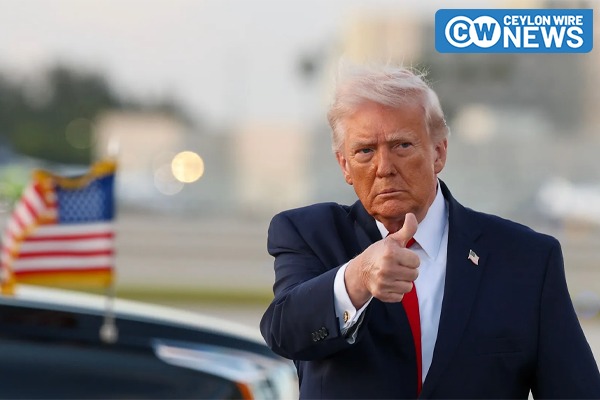
US President Donald Trump has paused military strikes on Iran for a second consecutive night, allowing more time for diplomatic efforts, according to the United States Ambassador to the United Nations.
Speaking to Fox News on Sunday, US Ambassador Mike Waltz said President Trump was “giving talks some space” while continuing to keep all options available.
An Iranian military spokesperson also confirmed that Tehran had suspended what it described as “retaliatory” attacks in the region.
The temporary pause comes after nearly two weeks of daily US airstrikes and retaliatory attacks by Iran, effectively ending the ceasefire agreed in June.
Asked whether the administration had ruled out further military escalation, Waltz told NBC that the President was “keeping all options on the table.”
He also dismissed reports by The New York Times claiming US officials had expressed concern that prolonged military operations could significantly deplete America’s air defence missile stockpiles.
“The US military has everything it needs to conduct this campaign effectively,” Waltz said.
President Trump had not publicly commented on the latest developments by Sunday evening. However, he shared computer-generated images on his Truth Social platform depicting US military aircraft bombing Iranian vessels and Kharg Island.
Meanwhile, Iran and Oman held several rounds of technical discussions in Tehran on Friday and Saturday on the management of the Strait of Hormuz, according to Iranian Foreign Ministry spokesperson Esmail Baghaei.
The Strait of Hormuz remains a major point of tension between Washington and Tehran after renewed disputes over its control earlier this month.
Although Iran and the United States signed a memorandum of understanding in June to suspend military operations, reopen the Strait of Hormuz and work towards ending the conflict within 60 days, the agreement collapsed after Iranian forces attacked tankers in the strategic waterway on 13 July.
The United States subsequently resumed airstrikes on Iran and reinstated its naval blockade of Iranian ports. Iran responded by launching attacks on US military bases across the Middle East, reportedly killing four American soldiers.
According to Iran’s Health Ministry, dozens of people have also been killed in the renewed US strikes.
In the United Kingdom, Defence Secretary Wes Streeting said he would meet US Defence Secretary Pete Hegseth this week to discuss security in the Strait of Hormuz, a critical global shipping route for oil, liquefied natural gas and other commodities.
Earlier this week, global oil prices rose to US$100 per barrel for the first time since May as renewed fighting heightened concerns over energy supplies.
The conflict, now approaching its fifth month, remains unpopular among many Americans. A recent CBS/YouGov poll found that 57% of respondents were frustrated by the war, while only 19% expressed optimism about its outcome.
President Trump is scheduled to meet Israeli Prime Minister Benjamin Netanyahu at the White House on Tuesday.