
The final decision on whether to remove the additional customs surcharge imposed on vehicle imports after December 31 will depend on the state of Sri Lanka’s foreign exchange reserves, stated Deputy Minister of Industry and Entrepreneurship Development, Chathuranga Abeysinghe.
Speaking during a television political talk show regarding vehicle prices and import duties, the Deputy Minister emphasized that further strengthening the country’s foreign exchange reserves remains the government’s main priority before relaxing such measures.
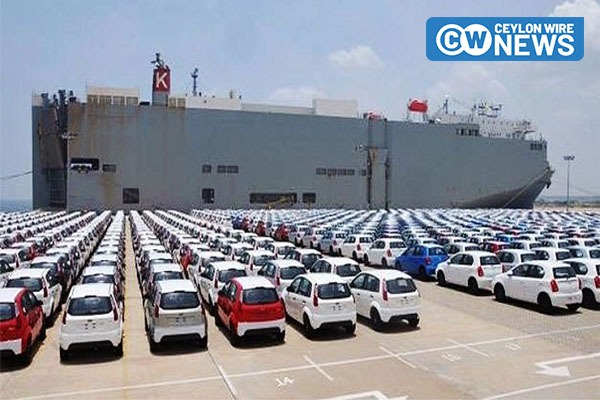
He pointed out that while vehicle imports—which had been restricted to protect foreign exchange reserves—were resumed with an initial government estimate of around $1.8 billion worth of imports, that figure has risen to $2.1 billion this year including taxes and surcharges.
This surge in vehicle imports has consequently driven up fuel demand, creating a need for temporary measures to slow down the pace of imports and manage demand. The Deputy Minister noted that the additional customs surcharge was introduced as part of this effort.
Therefore, he stated that a definitive commitment cannot be made at present regarding whether the surcharge will be removed after December 31, as it will ultimately depend on the foreign exchange situation in the coming period.
However, he added that as the tax base expands and the efficiency of government tax collection improves, the government aims to gradually reduce indirect, direct, and import taxes.
Responding to a query on whether vehicle import permits would be reintroduced, the Deputy Minister mentioned that such a step could be considered in the future once foreign exchange reserves and state revenues achieve further stability.
He emphasized that the government’s long-term policy is to reduce the tax burden on individuals and make purchasing vehicles more affordable, with all adjustments being implemented systematically.