
Former President Chandrika Bandaranaike Kumaratunga has revealed that a disturbing newspaper report concerning the alleged sexual exploitation of schoolgirls, along with her own children’s reaction to the report, contributed to the process that eventually led to the establishment of Sri Lanka’s National Child Protection Authority (NCPA).
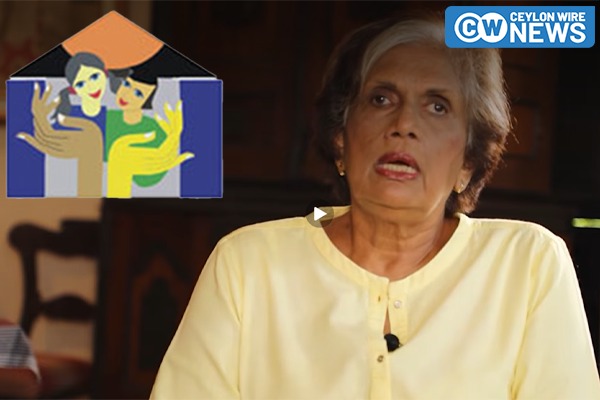
Speaking in an interview with Dr. Tush Wickramanayaka, Chairperson of the Stop Child Cruelty Trust, Kumaratunga recalled how concerns over child abuse during her presidency led to the establishment of a Presidential Task Force and subsequently a dedicated statutory authority.
Kumaratunga said she had reserved one day each week to spend time with her two children. She recalled an occasion when they approached her after reading a Sunday newspaper report alleging the sexual exploitation of girls from a leading Colombo school.
According to Kumaratunga, the report alleged that a school van driver had deceived the students, taken them to a hotel in Colombo and sexually exploited them, including by recording images.
She said her children questioned her about the incident and asked why such abuse could not be prevented even under their mother’s government.
Kumaratunga said the incident contributed to her decision to take stronger action to protect children.
She said her administration subsequently established task forces to examine several issues affecting children, including child abuse, drug abuse and suicide.
According to Kumaratunga, the task forces consisted largely of experts, government officials and people working in relevant fields rather than politicians.
“Politicians were not in those task forces. There were experts in the relevant subjects, government officials and people working in those areas,” she said.
The work of the task force ultimately led to the conclusion that Sri Lanka needed a specialised institution with adequate powers to address child abuse, Kumaratunga said.
Official NCPA records show that Kumaratunga appointed a Presidential Task Force on Child Protection in December 1996. One of its key recommendations was the establishment of the NCPA.
The National Child Protection Authority Bill was subsequently presented to Parliament in August 1998 and passed unanimously on November 12, 1998.
The NCPA was established under the National Child Protection Authority Act, No. 50 of 1998, with responsibilities including advising the government on preventing child abuse, protecting victims, monitoring action against abuse and recommending legal and administrative reforms.
Kumaratunga rejected suggestions that her administration faced significant political resistance to establishing the authority.
She said the greater challenge was identifying people with the necessary knowledge and expertise to carry out the work.
“We had to find people who understood this and could work on it,” she said, adding that individuals from civil society and the private sector were brought in to work alongside government officials.
Kumaratunga also recalled efforts to strengthen the police response to cases involving violence against women and children, including the establishment of specialised units involving female police officers.
She said public awareness campaigns were also conducted to encourage people to report cases of abuse.
Kumaratunga further acknowledged the important role played by civil society organisations in addressing violence against children and women, including before the government introduced dedicated mechanisms.
The NCPA formally became operational on June 4, 1999, following the appointment of its first chairman, Prof. Harendra de Silva, and the establishment of its governing council.