
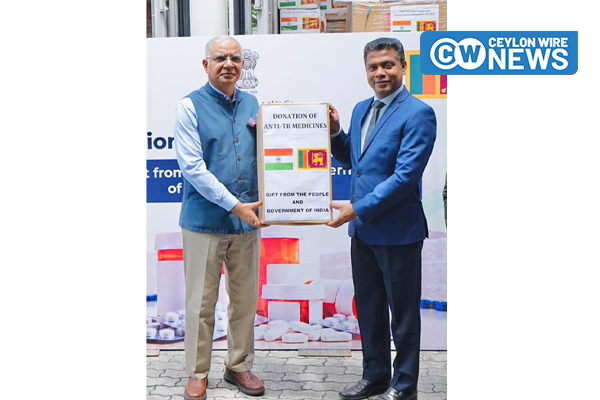
India has donated three tonnes of anti-tuberculosis (TB) medication to support Sri Lanka’s public health system.
Indian External Affairs Minister S. Jaishankar announced the dispatch in a post on X, reaffirming India’s commitment to supporting its neighbouring country.
“India remains steadfast in its commitment to strengthening Sri Lanka’s public health system. Accordingly, three tonnes of anti-tuberculosis medication were sent to Colombo today aboard an Indian Air Force C-130J aircraft,” he said.
Meanwhile, member countries of the World Health Organization (WHO) South-East Asia Region have agreed to strengthen efforts to address gaps in the fight against tuberculosis.
The decision was reached during the 79th session of the WHO South-East Asia Regional Committee, where discussions focused on early detection, expanding prevention and treatment services, protecting patients’ families from financial hardship and preparing for new TB vaccines.
In 2024, the WHO South-East Asia Region accounted for 34% of new tuberculosis cases reported worldwide, with approximately 3.68 million cases and 433,000 deaths. The region also recorded around 150,000 cases of drug-resistant tuberculosis, representing more than 38% of the global total.
Member countries agreed to strengthen early detection through routine health services, systematic screening and targeted testing in high-risk communities. They also committed to expanding access to rapid diagnostic methods, including molecular testing and digital technologies recommended by the WHO.
Further measures include providing quality treatment for drug-resistant TB patients, strengthening nutritional and community-based support, and addressing social, financial and geographical barriers to healthcare. The countries also stressed the need to tackle misconceptions surrounding the disease and adopt a more people-centred approach to patient care.