

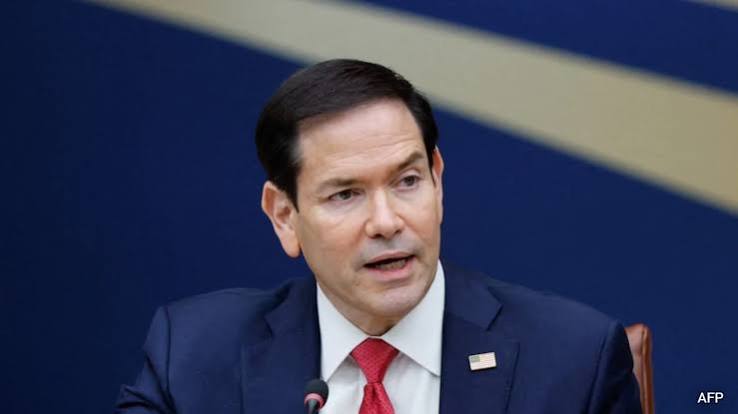

US Secretary of State Marco Rubio has rejected widespread speculation that a series of technology outages affecting major American institutions and services over the past week were connected, saying there is “zero evidence” of any link between the incidents.
Rubio acknowledged public concerns that the disruptions, which affected airlines, banks and major technology companies, could be part of a coordinated operation.
However, he insisted that the United States was not facing a systemic attack.
“We are not under systemic attack,” Rubio told reporters. “These events, one has nothing to do with the other, they are not inter-related.”
His comments came after US Director of National Intelligence Jay Clayton also dismissed suggestions that the incidents were caused by a cyberattack. Speaking to Fox News, Clayton said several institutions were updating or upgrading their systems, which had resulted in technical disruptions.
Rubio said the Government’s approach was to share available information with the public to address concerns and prevent unnecessary panic, including fears that the incidents could trigger stockpiling or bank runs.
He said every available indicator pointed to individual technical causes unrelated to cybercriminals, hostile actors or foreign governments.
Series of Outages Affect Major US Services
The disruptions began last Thursday with a major Microsoft outage that affected several services, including email.
The following day, the Federal Aviation Administration ordered a nationwide ground stop that grounded flights across the United States for more than four hours.
On Monday, a technology failure at United Airlines delayed approximately 150 flights, while a software problem at JPMorgan Chase disrupted some banking services.
On Tuesday, Apple users experienced disruptions to iCloud and Apple Pay. The company said the incident was triggered by an internal update and was not the result of a cyberattack.
A highly classified internal communications network used by the US National Security Agency also experienced an outage on the same day.
The companies and agencies affected have said their respective incidents were not related to cyberattacks.
Experts Point to Ageing Digital Infrastructure
Cybersecurity experts have also found no evidence connecting the recent disruptions.
Kris Beevers, Chief Executive Officer and co-founder of network and infrastructure management company NetBox Labs, dismissed conspiracy theories circulating on social media.
He said the incidents reflected the risks associated with rapidly changing digital infrastructure, much of which was built 30 to 40 years ago and now carries decades of accumulated technical debt.
Beevers added that artificial intelligence was contributing to increased pressure on legacy networks while creating greater urgency around security improvements.
Sherrod DeGrippo, Vice President of Threat Intelligence at Palo Alto Networks Unit 42, said the incidents highlighted the vulnerability of interconnected digital infrastructure.
She noted that a single software bug or router failure could trigger widespread disruptions across essential services.
The recent incidents have renewed attention on the reliability of critical digital systems, particularly as airlines, banks and other major institutions increasingly depend on interconnected technology.