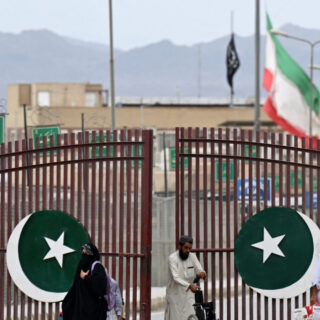

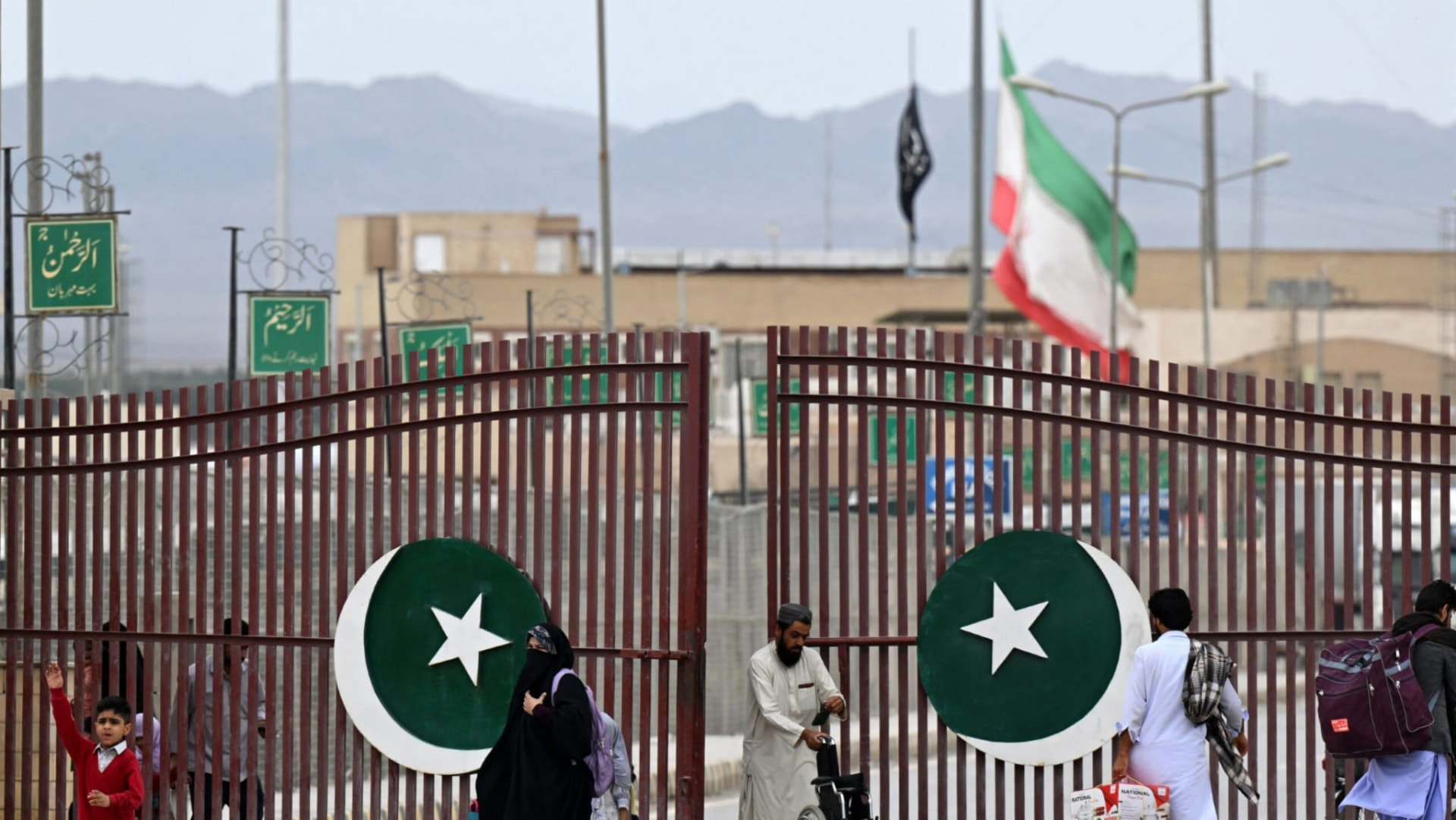

Pakistan’s military chief, Field Marshal Asim Munir, arrived in Tehran on October 20 seeking to strengthen Islamabad’s role as a mediator in an increasingly volatile Middle East. Yet his visit highlighted a striking contradiction: Pakistan was offering reassurance to Iran after closing crucial border crossings that Tehran increasingly depends upon.
According to Iranian accounts of Munir’s talks with President Masoud Pezeshkian, the Pakistani commander announced that border difficulties had been resolved and commercial traffic restored. The suspension at Taftan and Gabd-Rimdan had reportedly stranded approximately 2,000 trucks, disrupting trade and increasing uncertainty for businesses on both sides.
Islamabad cited security concerns, smuggling and border-management requirements. Iranian officials described the interruption as a temporary technical or precautionary measure. Whatever the explanation, the closures carried geopolitical consequences far beyond routine customs procedures.
Iran’s Economic Lifeline Under Pressure
With Iranian maritime trade constrained by an American blockade, overland routes through Pakistan have become increasingly important. They cannot replace major seaports, but they provide alternative channels for essential goods, help local businesses survive and reduce Iran’s economic isolation.
Earlier, Islamabad had permitted third-country goods to transit through designated land crossings into Iran. That decision positioned Pakistan as an economic lifeline. The subsequent suspension, however brief, demonstrated how vulnerable that lifeline remains to political and security decisions made in Islamabad.
The sanctions issue adds another layer of uncertainty. Pakistan’s Foreign Office recently stated that the country would observe applicable sanctions regimes without clarifying precisely which restrictions it meant. For Tehran, the distinction between international obligations and broader American pressure is significant. For traders and transport companies, ambiguity translates into financial risk.
Munir’s diplomatic mission also encountered firm Iranian positions. Tehran reiterated that negotiations with Washington would not resume without progress on its demands, including an end to the blockade, relief from oil-export sanctions and an end to regional hostilities. Iranian security official Mohsen Rezaei also insisted that the country’s enriched nuclear material would remain on Iranian soil.
Pakistan’s Saudi Alliance Raises Questions in Tehran
Meanwhile, Pakistan’s growing defence relationship with Saudi Arabia complicates its position. The Mecca defence agreement, activated on October 5 amid escalating Houthi attacks, places Islamabad more visibly within Riyadh’s security architecture.
Just one day before Munir visited Tehran, Pakistan’s military publicised discussions with the Saudi ambassador about stronger defence cooperation and strategic coordination.
Islamabad insists that Pakistani personnel deployed in Saudi Arabia are performing defensive duties and will not enter Yemen. That assurance is important, but it cannot eliminate Iranian concerns about the potential consequences of closer Pakistani-Saudi military cooperation.
None of these developments proves that Pakistan intends to join military operations against Iran or that Washington ordered the border closures. Nevertheless, the overlap between economic restrictions, military alignments and diplomatic mediation creates an increasingly fragile environment.
Balochistan: A Dangerous Security Front
Security conditions in Balochistan further complicate matters. Pakistan faces a persistent nationalist insurgency, while Iranian forces have repeatedly confronted armed groups operating near the frontier. The reciprocal strikes of January 2024 showed how rapidly tensions can escalate into direct confrontation.
Border restrictions also impose immediate costs on civilians. Drivers are stranded, perishable cargo deteriorates, transport expenses rise and traders lose customers. Communities dependent on cross-border commerce bear the consequences of decisions over which they have little influence.
For Pakistan, the challenge is now unmistakable. It wants Iranian confidence, Saudi security cooperation and workable relations with Washington, while simultaneously promising stable regional trade routes. These objectives are not necessarily incompatible, but they demand consistency and transparency.