

Democrats won both chambers of Congress on 3 November, and they have been explicit about where they will look first. House Oversight’s ranking Democrat, Robert Garcia, told Republicans to “lawyer up”, while Senator Ron Wyden promised subpoenas. Their stated priorities include the Trump family’s business dealings and the private companies that have sought influence with the White House. For Pakistan this is a structural risk, because few countries have built their Washington strategy so closely around the Trump orbit.
A strategy built on access
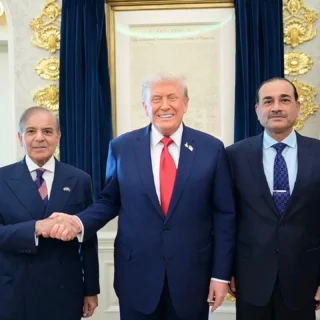
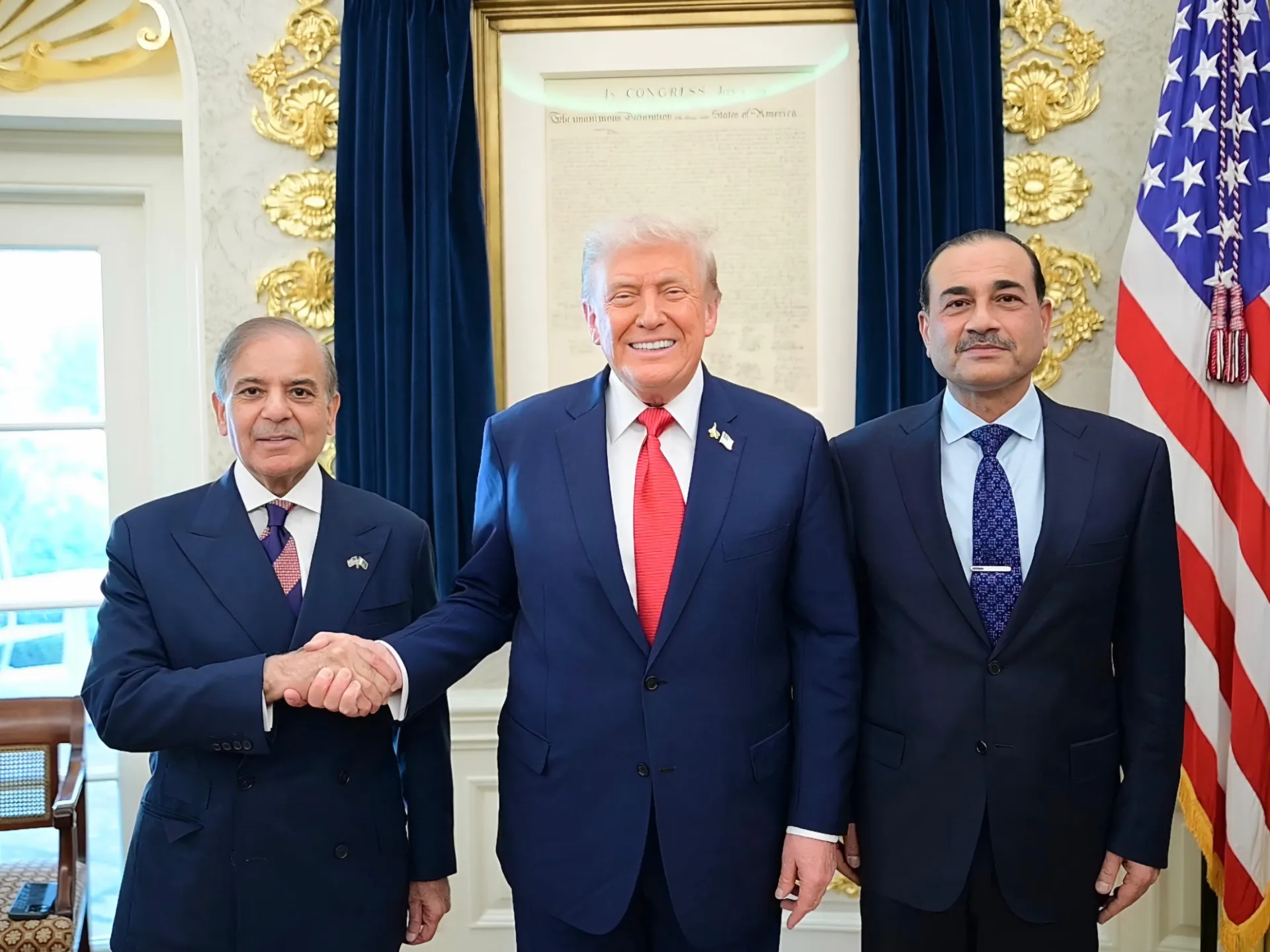
Pakistan recognised early that Trump’s diplomacy is transactional. One analyst told the Washington Post that Islamabad offered three things: crypto, critical minerals and counterterrorism. Army chief Field Marshal Asim Munir became the main channel. A June 2025 White House lunch with Trump excluded civilian officials, and the military said the talks covered mining, energy and cryptocurrency, according to Reuters.
The payoffs have been real but thin. The US Export-Import Bank approved $1.25 billion for the Reko Diq copper and gold project in December 2025. Pakistan’s $10 billion request for a US Treasury facility remains unanswered. Pakistan also gained strategic weight by mediating between Washington and Tehran during the Iran war.
Three deals that touch the family orbit
1. World Liberty Financial (WLF). In April 2025 a WLF delegation led by Zachary Witkoff, son of Trump envoy Steve Witkoff, signed a letter of intent with the Pakistan Crypto Council. Its chief, Bilal bin Saqib, became a WLF adviser that month, later became a government crypto adviser, and now chairs the regulator PVARA. On 14 January 2026 Finance Minister Muhammad Aurangzeb signed a memorandum with SC Financial Technologies, a WLF sister company, to explore using the USD1 stablecoin for cross-border payments. WLF said it receives no compensation from the agreement. But WLF earns interest on the reserves backing USD1, so wider use benefits its owners, including the Trump family, which Al Jazeera reports earned the president more than $500 million from token sales in 2025. By July, Pakistani officials confirmed there was no USD1 pilot, no licence issued and no known USD1 transaction. Senator Richard Blumenthal had already argued that foreign governments can enrich and compromise the president through WLF.
2. The Roosevelt Hotel. In February 2026 Pakistan’s finance ministry signed a non-binding memorandum with the US General Services Administration to redevelop the Manhattan hotel owned by Pakistan International Airlines, which Islamabad values at over $1 billion. The memorandum was negotiated by Witkoff, a former New York developer, and Reuters noted it specifies no financial terms. This is government-to-government, not a family business deal, but it was brokered by the same figure whose son runs WLF, which is how Democrats are likely to frame it.
3. Powerus. During a mid-September 2026 visit, the drone maker Powerus won a limited order from Pakistan’s defence ministry and signed a preliminary agreement with the army. Powerus is merging with Aureus Greenway Holdings, in which Donald Trump Jr. and Eric Trump hold a stake through American Ventures, projected at roughly 9.9% of the merged company. A spokesman for Trump Jr. said he is a passive investor who did not know of the Pakistan agreement beforehand. The White House said there is no conflict of interest.
One more deal belongs in this picture, though not as a family asset. The $500 million minerals memorandum between the military-run Frontier Works Organisation and Missouri-based US Strategic Metals has no reported Trump family stake. But Munir showcased the minerals to Trump in person, no terms were published, and the opposition PTI demanded parliamentary scrutiny. The Pasni port pitch reported by the Financial Times, which the military denied, fits the same back-channel pattern.
How scrutiny could bite
Pakistan’s problem is less that it will be investigated than that its counterparties will be. Democrats have reportedly already requested records from companies tied to Trump, to “pave the way” for subpoenas, and Reuters reports that participants in deals brokered by Trump family members are expected among the first targets, with probes possible from February. Pakistan itself cannot be subpoenaed, but WLF, Powerus and their advisers can. Their emails and term sheets would show who proposed what, and which Pakistani officials were involved. This is my inference from how oversight works, not a reported plan.
The second risk is fragility. Most of these arrangements are memorandums of understanding: non-binding, exploratory and personality-driven. Husain Haqqani, a former Pakistani ambassador to Washington, told Reuters that some arrangements involving Trump’s friends and relatives may not survive, and that Pakistan “seems totally unprepared for that scrutiny.” If a counterparty becomes politically toxic, an MoU is easy to shelve quietly.
The third risk is lost leverage. Trump keeps broad authority over foreign policy, and a White House official has already warned that the administration still controls the federal government and all of its powers, which suggests slow-walking of requests. But a Democratic Senate can delay nominees, including ambassadors, and both chambers shape funding. Michael Kugelman of the Atlantic Council warned that Pakistan put so many diplomatic eggs in the White House basket that it may have nothing left for Democrats.
Why the damage may be contained, and where it won’t be
There are real mitigating factors. Kugelman noted that Pakistan’s counterterrorism cooperation and its Iran diplomacy enjoy bipartisan support, and that Democrats are more likely to blame problematic deals on Trump than on Pakistan. Daniel Markey of the Stimson Center warned, however, that investigations could damage the wider relationship if deals appear driven by private interests. No public evidence shows wrongdoing by Pakistan, and the White House denies any conflict.
The weak point is that Democratic goodwill toward Pakistan was never deep. A December 2025 congressional hearing heard criticism of Pakistan over militancy in Kashmir, and in March 2025 a bipartisan House bill sought sanctions on senior Pakistani officials over human rights, amid lobbying by Imran Khan’s US-based supporters. Those pressures did not disappear when Pakistan found favour with Trump.
Bottom line
The most likely outcome is not a rupture but a repricing. Congressional scrutiny will probably cool Trump-linked counterparties, slow soft-commitment deals like USD1 and the Roosevelt redevelopment, and turn Pakistan’s military-led access into a talking point in Washington. The hard assets, notably the Export-Import Bank’s Reko Diq financing and counterterrorism cooperation, are likelier to survive. Pakistan’s real exposure is the political capital it invested: two years of cultivating one man’s circle, with little left for a party now in control of the House and the Senate.
The practical response is to shift from personal to institutional channels, publish what terms it can, and build Capitol Hill relationships before the first subpoena lands.