
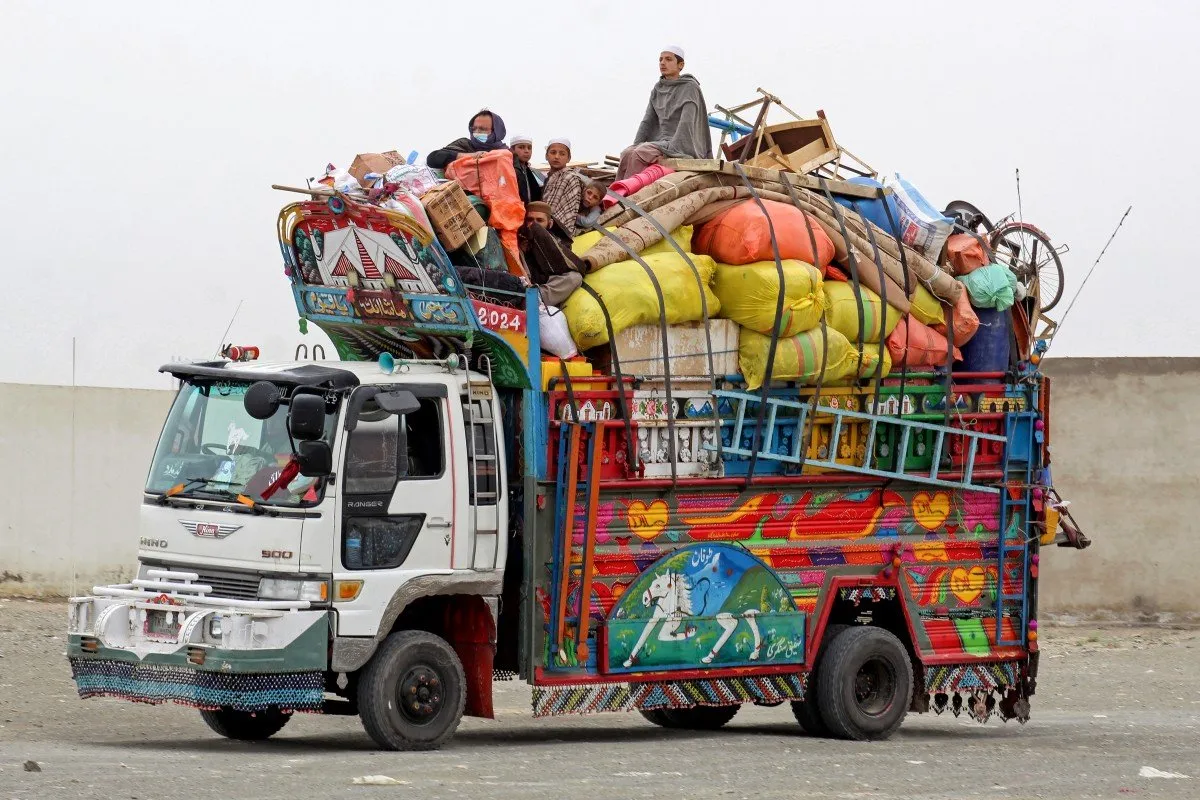
Pakistan increasingly frames its confrontation with Afghanistan in the language of national security, terrorism and self-defence. Islamabad accuses the Taliban authorities of allowing the Tehreek-e-Taliban Pakistan (TTP) and other militant groups to operate from Afghan territory — an allegation Kabul repeatedly denies.
But behind this interstate dispute lies another reality: ordinary Afghans — refugees, children, students, journalists, patients, traders and families — have repeatedly borne the consequences.
The pattern extends far beyond the battlefield. It runs from homes searched in Pakistani cities to families separated during deportation; from Afghan students ordered out of universities to journalists facing return to the Taliban government they fled; from border restrictions disrupting livelihoods to Pakistani military operations that have caused significant civilian casualties inside Afghanistan.
Pakistan’s Illegal Foreigners’ Repatriation Plan, introduced in 2023 and progressively expanded, has become perhaps the most visible expression of this pressure.
According to joint UNHCR-IOM monitoring, 2,704,064 Afghans returned from Pakistan between 15 September 2023 and 29 August 2026. During the first eight months of 2026 alone, approximately 79,436 Afghans were arrested or detained. Balochistan accounted for 57 percent of those arrests and detentions, the largest share of any province. UN agencies caution that figures involving undocumented Afghans are likely underreported.
These numbers conceal individual stories.
Human Rights Watch has documented Pakistani police conducting door-to-door raids, late-night home searches and arrests without warrants, including the detention of Afghans holding valid visas. Refugees interviewed by the organisation described restricting their movements, avoiding hospitals and keeping children indoors because they feared arrest. HRW also reported cases in which families were forcibly separated, including children as young as 13 being returned to Afghanistan alone while their parents remained behind.
At the same time, official rhetoric toward Afghans has hardened.
In March, Pakistan’s Defence Minister Khawaja Asif called the country’s decades-long hosting of Afghans its “gravest mistake.” Responding to accusations surrounding Pakistani military action in Afghanistan, he described those attacking Pakistan after receiving refuge there as “ungrateful.” Prime Minister Shehbaz Sharif has similarly invoked Pakistan’s four decades of hosting Afghan refugees while linking that history to Islamabad’s current security grievances.
Pakistan is entitled to raise legitimate security concerns. But such rhetoric risks blurring a distinction that should remain fundamental: the Taliban government is not the Afghan population, militant organisations are not Afghan refugees, and nationality is not evidence of involvement in terrorism.
The treatment of Afghan students illustrates the consequences.
On 1 September, the Pakistan Medical and Dental Council directed Afghan students already enrolled in medical and dental programmes to return to Afghanistan and barred new Afghan admissions for the current academic session. The Human Rights Commission of Pakistan estimated that about 100 Afghan medical and dental students in Lahore alone could be affected, including between 20 and 40 women.
For Afghan women, the consequences are particularly severe. Taliban restrictions have effectively shut women out of universities and medical education inside Afghanistan. Returning a female medical student is therefore not simply a change of country; for many, it could mean the end of their education altogether.
The Lahore High Court intervened after 13 Afghan students challenged the directive, suspending its implementation and allowing the petitioning students to continue their studies and examinations. On 18 September, the court extended that suspension while respondents sought additional time to submit their replies.
Afghan journalists have faced a similar insecurity.
The Committee to Protect Journalists documented Afghan reporters being detained in Islamabad even after presenting valid Pakistani visas and passports. Reporters Without Borders says at least 50 Afghan journalists have been forcibly returned from Pakistan to Afghanistan since Pakistan launched its mass deportation policy. Many of those journalists originally fled Afghanistan because of threats and repression under Taliban rule.
The result is a grim paradox: people who escaped Afghanistan because journalism placed them in danger have found themselves at risk of being sent back into that same danger.
The most serious civilian toll, however, has come from military operations inside Afghanistan.
On 28 March 2025, a Pakistani airstrike in Paktika province struck a house and killed seven civilians, including five children, according to a UN report. In November, Afghan authorities blamed Pakistan for airstrikes that killed 10 civilians, nine of them children; UNAMA confirmed civilian deaths from the strikes, although Pakistan denied responsibility.
The violence intensified in 2026.
UNAMA reported that Pakistani airstrikes in Nangarhar on 21 and 22 February killed at least 13 civilians and injured seven others, including women and children. Between the night of 26 February and 5 March, UNAMA verified 185 civilian casualties inside Afghanistan — 56 killed and 129 injured — from aerial attacks and indirect fire during fighting between Pakistani and Afghan forces. Women and children made up 55 percent of the casualties. In one strike in Barmal district alone, 14 civilians were killed, including four women and seven children.
Then came the 16 March strike on Kabul’s Omid Rehabilitation and Treatment Center.
UNAMA later independently verified that at least 269 civilians were killed and 122 injured. Pakistan maintained that the site was being used for military purposes and contained weapons and ammunition. But after examining satellite imagery, photographs, videos and witness accounts, Amnesty International said it found no evidence supporting that claim and called for the attack to be investigated as a possible war crime.
On 28 June, Pakistani forces again carried out airstrikes inside Afghanistan. UNAMA confirmed that at least 28 civilians were killed and 49 wounded in Paktya, Paktika and Kunar provinces, with women and children among the victims. Pakistan’s Ministry of Information confirmed that its security forces had carried out strikes in the three provinces.
None of this erases Pakistan’s own security crisis.
Pakistan has suffered devastating militant attacks that have killed civilians and security personnel, and Islamabad maintains that armed groups operating from Afghanistan pose an intolerable threat. The latest violence has reinforced those fears. Kabul, however, rejects the accusation that it permits the TTP to use Afghan territory against Pakistan.
On 18 September, Taliban spokesperson Zabihullah Mujahid again denied that Afghan territory was being used for attacks against Pakistan. He warned that Afghanistan would defend its sovereignty against further Pakistani military action, while also calling for dialogue, stronger intelligence-sharing mechanisms and cooperation between the two countries. He welcomed a possible Saudi role in mediating their dispute. Pakistan responded by saying dialogue could not become a substitute for action against militants.
That security dispute is serious. So are Pakistan’s losses to terrorism. But neither changes the basic obligation to distinguish between militants and civilians.
A refugee is not a militant because of nationality. A medical student is not responsible for relations between Kabul and Islamabad. A journalist seeking protection is not a security threat merely because he or she is Afghan. And civilians inside Afghanistan do not lose their protected status because armed groups may operate elsewhere in the country.
National security is tested not only by the threats a state confronts, but also by the lines it refuses to cross while confronting them.
When millions are uprooted, tens of thousands are detained, students face expulsion, journalists risk forced return and hundreds of civilians are killed in military operations, these outcomes cannot simply be dismissed as disconnected side effects of a security dispute.
Taken together, they reveal the enormous human price being imposed on Afghan civilians for a conflict they did not create.
The views expressed in this article are those of the author and do not necessarily reflect the views of Khaama Press.