
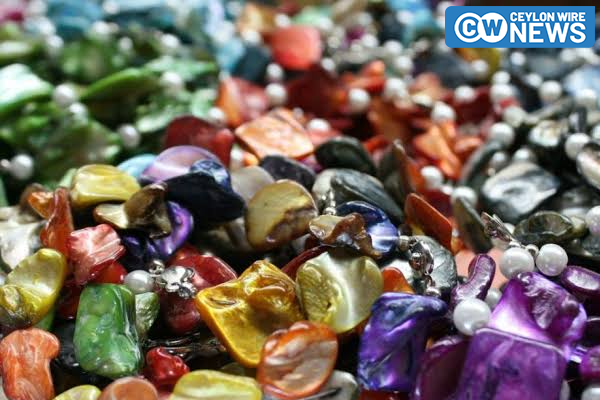
Sri Lanka has long been known as Ratna-Dweepa, the “Island of Gems.” From the legendary blue sapphires of Ratnapura to prized rubies, spinels, garnets, cat’s-eye chrysoberyl, and dozens of other precious and semi-precious stones, the island possesses one of the world’s richest gemstone deposits. Today, however, a growing debate is emerging over who is capturing the real value of this natural treasure. While Sri Lankan miners and local traders often struggle with fluctuating incomes, foreign buyers, including those from China, are increasingly visible in the gemstone trade, raising questions about whether the country is receiving a fair return for its resources.
China’s appetite for luxury goods has expanded dramatically over the past two decades, and gemstones have become an important part of that demand. Chinese markets in Beijing, Shanghai, Shenzhen, Guangzhou, and Hong Kong have developed into major destinations for high-value sapphires and coloured gemstones sourced from Sri Lanka. Chinese buyers are particularly interested in untreated and certified stones, especially premium blue sapphires and rubies.
The concern expressed by some industry observers is not merely that Chinese traders are purchasing Sri Lankan gemstones. Trade itself is a normal and legitimate commercial activity. The real concern is that much of the value addition often occurs after the stones leave Sri Lanka. Raw or minimally processed gems can be purchased, exported, cut, polished, branded, and marketed internationally before being sold to affluent consumers at significantly higher prices. In such a system, the country where the gems originate may receive only a fraction of the final retail value.
Reports from the gemstone industry indicate that direct sourcing has become increasingly common. Buyers seek to reduce costs by purchasing closer to mining areas and production centres. Industry participants frequently advertise the advantage of eliminating intermediaries and sourcing directly from mining regions such as Ratnapura and Elahera. Critics argue that when international traders possess greater capital, market intelligence, and global sales networks, local miners and labourers may possess weaker bargaining power during negotiations.
Sri Lanka’s gemstone wealth is extraordinary. The country is internationally recognised for producing blue sapphires, padparadscha sapphires, yellow sapphires, pink sapphires, white sapphires, rubies, spinels, garnets, tourmalines, zircon, moonstones, alexandrite, cat’s-eye chrysoberyl, and numerous other varieties. According to the Sri Lanka Export Development Board, Sri Lanka exports top-quality blue sapphires and roughly 75 other gemstone varieties to international markets. The country’s reputation for high-quality untreated stones has made it a preferred source for buyers around the world.
The economic importance of the sector is substantial. Data published by Serendib Blue Gem Data Hub, citing Sri Lankan industry sources, reported approximately US$430 million in gem and jewellery exports during FY2024. Cut and polished stones accounted for the majority of export value, while sapphires represented a particularly significant share of exports. The United States, Thailand, Hong Kong, Switzerland, and the UAE were among the leading destinations. Notably, some of these markets function as re-export hubs where gemstones may change hands multiple times before reaching final consumers.
This raises a broader policy question. If Sri Lanka is exporting one of the world’s most valuable natural resources, should it focus more aggressively on domestic cutting, polishing, branding, certification, and jewellery manufacturing? Every stage of value addition generates jobs, expertise, tax revenue, and foreign exchange. When the majority of downstream processing takes place overseas, the largest profits inevitably flow elsewhere.
The debate also touches upon governance. Critics argue that governments across South Asia have often emphasised export volumes rather than value retention. The issue is not unique to Sri Lanka or China. Resource-rich countries around the world have struggled with similar challenges involving minerals, agricultural products, and energy resources. Nevertheless, the visibility of Chinese buyers in the gemstone trade has become particularly notable because of China’s rapidly growing luxury market and extensive commercial networks.
Critics contend that Beijing’s expanding global economic footprint has been accompanied by persistent controversies over infrastructure lending, environmental standards, resource extraction, and trade practices. From allegations of debt dependency associated with certain Belt and Road projects to concerns about environmental degradation linked to overseas mining operations and complaints of market-distorting export surpluses, China’s international economic strategy has increasingly come under scrutiny. Chinese officials reject such accusations, describing their overseas investments and trade relationships as mutually beneficial and essential for development. Nevertheless, the growing debate reflects a broader concern among many countries that economic engagement with China can sometimes create asymmetric advantages that disproportionately favour Chinese state-backed enterprises and commercial interests.
The ultimate responsibility therefore lies not only with overseas buyers but also with policymakers and industry regulators. If Sri Lanka wishes to maximise the value of its gemstone resources, it must strengthen domestic processing, encourage local entrepreneurship, improve transparency, expand gem certification capabilities, and develop globally recognised Sri Lankan luxury brands. Such measures would ensure that a larger share of gemstone wealth remains within the country rather than being captured further down the international supply chain.
Sri Lanka possesses a natural advantage that few nations can replicate. The question for the future is whether the island will remain primarily a supplier of raw gemstone wealth or evolve into a global centre for gemstone branding, cutting, jewellery manufacturing, and luxury exports. As Chinese demand continues to grow, that choice may become increasingly important for the country’s economic future.
References:
https://www.srilankabusiness.com/gem-diamond-and-jewellery/exporter-information/
https://www.abeywardhanegems.com/gem-exporters-sri-lanka
https://www.abeywardhanegems.com/wholesale-gemstones-sri-lanka
https://serendibblue.com/sri-lanka-gem-export-statistics
https://www.gemtochina.com/lk.html
- Sarada Senewiruwan