
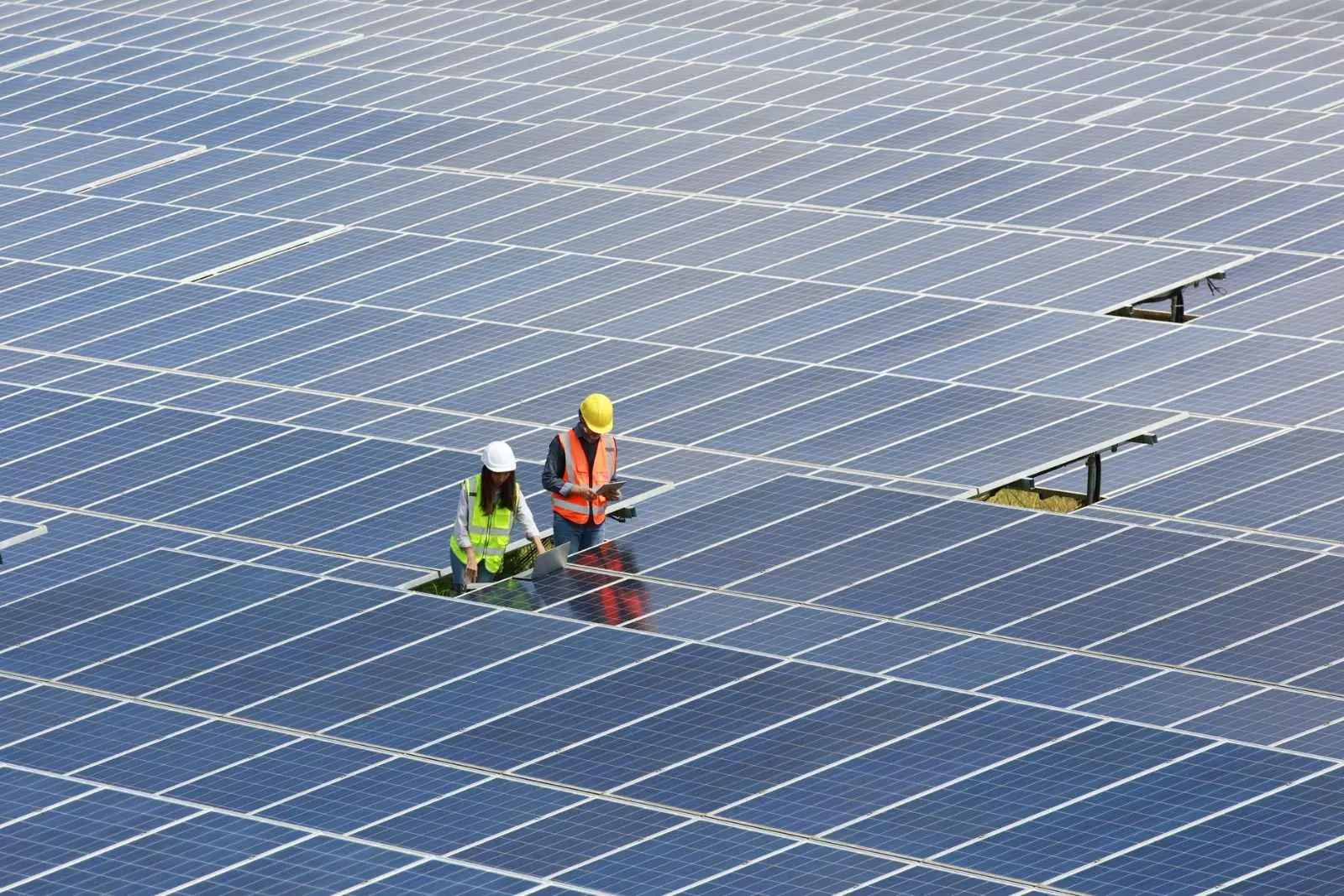
Construction is underway in western India on what billionaire-led Adani Group says will be India’s largest battery energy storage system. Located inside the Khavda Renewable Energy Park in Gujarat, the project is designed to store 3,530 megawatt-hours of power. Full completion was targeted by March 2026. However, as of April 2026, only 39% of capacity is operational and the battery remains unfinished despite the deadline
3,530 megawatt-hours across 700 containers
The battery system uses lithium-ion technology across more than 700 containers. Its power capacity is 1,126 megawatts, with an energy capacity of 3,530 megawatt-hours, enough to sustain that output for roughly three hours. The Adani Group announced the project on November 11, 2025, The company has not disclosed the total investment amount. As of April 1, 2026, Adani had brought 1,376 megawatt-hours of capacity online at Khavda. But no updated completion date for the remaining capacity has been publicly stated.
What it solves on the grid
Solar and wind fluctuate with weather and time of day. India’s grid needs power when the sun goes down and demand peaks.This battery absorbs excess daytime generation and discharges it in the evening, reducing reliance on fossil fuel plants. Adani says it will also ease transmission congestion and reduce curtailment when grids waste renewable power they can’t handle
“Energy storage is the cornerstone of a renewable-powered future,” Adani Group chairman Gautam Adani said in the November announcement. “With this historic project, we are not only setting global benchmarks but also reinforcing our commitment to India’s energy independence and sustainability.”
The roadmap beyond Khavda
Adani’s roadmap extends beyond this installation. The group plans to deploy an additional 15 gigawatt-hours of storage by March 2027. Its five year target is 50 gigawatt-hours total. For context, India’s Central Electricity Authority projects the country will need roughly 34 gigawatt-hours of battery storage capacity by 2026-27, rising to 236 gigawatt-hours by 2031-32. As of April 2025, only around 0.5 gigawatt-hours of battery storage had been commissioned across India, according to the India Energy Storage Alliance.
The park behind the battery
The Khavda park is already operating at scale. Adani Green Energy added more than 5 gigawatts of new renewable capacity in fiscal year 2025-26, the highest greenfield annual expansion by any company outside China. This brings its total operational portfolio to 19.3 gigawatts. Cumulative installed capacity at Khavda has reached 9.4 gigawatts of the 30 gigawatt target planned for 2029. The park spans 538 square kilometers, an area five times the size of Paris.
India’s larger bet
India has committed to reaching 500 gigawatts of non-fossil energy capacity by 2030 and net-zero emissions by 2070. Storage determines whether intermittent generation can function as baseload power. The Khavda battery doesn’t just store electricity; it tests whether a project of this ambition can be built and operated at the pace India’s energy transition requires