

From a State-Led Programme to a Competitive Space Economy:
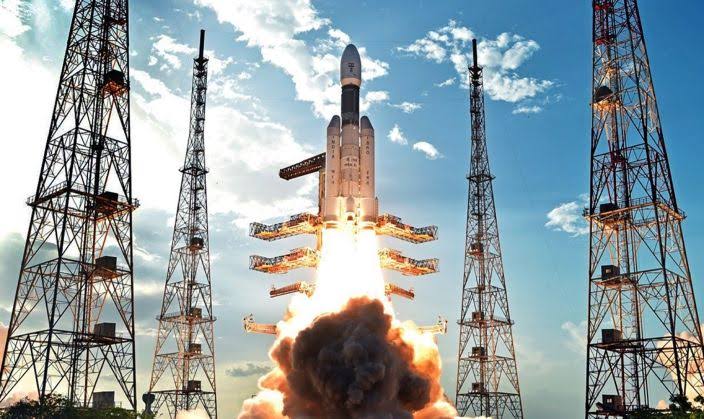
India’s space programme is undergoing one of the most significant transformations in its history. Long regarded as a state-led enterprise defined by scientific achievement, national prestige and strategic capability, the sector is now entering a new phase characterised by commercialisation, private participation and entrepreneurial innovation.
The reforms initiated in 2020 and institutionalised through the Indian Space Policy 2023 have fundamentally altered the structure of India’s space ecosystem, opening opportunities for start-ups, private industry, investors and global partnerships. As a result, the country is steadily transitioning from a government-dominated model towards a diversified and commercially driven space economy with ambitions that extend well beyond launch achievements and planetary exploration.
For decades, India’s space programme was almost entirely synonymous with ISRO. The organisation built a formidable reputation through cost-effective satellite launches, interplanetary missions and indigenous technological development. Yet the institutional architecture also meant that most aspects of the space value chain, from satellite development and launch services to infrastructure ownership and operations, remained concentrated within the state.
Recognising these constraints, the Government of India initiated a far-reaching restructuring of the sector in 2020. The objective was not merely to increase private investment but to create an entirely new framework that would allow commercial enterprises to participate across the full spectrum of space activities. This restructuring was subsequently codified through the Indian Space Policy 2023.
The Indian Space Policy 2023 and Institutional Transformation:
The vision articulated in the policy reflects a much broader understanding of the role of space in national development. Rather than treating space solely as an arena for scientific exploration, the policy views it as a driver of technological innovation, economic growth, international cooperation, environmental monitoring, national security and industrial competitiveness. Importantly, it recognises that these objectives can no longer be achieved through state institutions alone and therefore places public and private actors on complementary footing within the evolving ecosystem.
A defining feature of the new framework is the redistribution of responsibilities among ISRO, the Indian National Space Promotion and Authorisation Centre (IN-SPACe), NewSpace India Limited (NSIL) and non-government entities (NGEs). Under this arrangement, IN-SPACe has emerged as a critical institution for nurturing private participation.
Through IN-SPACe, private companies can gain access to testing facilities, launch infrastructure, data generated using public resources and ISRO-developed technologies. The institution is also tasked with promoting industrial clusters, supporting innovation and simplifying access to opportunities that were previously available only to government agencies.
Creating an Ecosystem for Private Enterprise:
The significance of these reforms lies in the unprecedented degree of freedom they provide to private participants. Indian and foreign entities are now permitted to undertake end-to-end space activities, including satellite manufacturing and operations, launch vehicle development, remote-sensing services, space-based communications and the establishment of launch infrastructure.
The practical impact of this liberalisation is already visible in the rapid emergence of a vibrant start-up ecosystem. For the first time, India possesses a substantial community of private space enterprises pursuing independent commercial strategies, developing proprietary technologies and attracting investment from both domestic and international sources. By mid-2026, nearly 400 space start-ups had become active participants in the sector, representing one of the fastest-growing segments of India’s innovation economy.
This growth has been enabled not only by regulatory reform but also by targeted institutional support. IN-SPACe has launched a range of initiatives designed specifically to reduce barriers faced by emerging companies.
Programmes such as the Seed Fund Scheme, Pricing Support Policy, Mentorship Support initiatives, design laboratories for NGEs, skill-development programmes, technology transfer mechanisms and access to ISRO facilities have created a supportive ecosystem for innovation. These measures are particularly significant in a sector where technological complexity, high capital requirements and long development cycles often discourage new market entrants.
Financing India’s Space Start-up Revolution:
Financial support has emerged as another major catalyst. The establishment of the ₹1,000 crore Antariksh Venture Capital Fund reflects a recognition that traditional financing mechanisms are often inadequate for deep-technology ventures operating in the space sector. Complementing this initiative is the ₹500 crore Technology Adoption Fund, designed to help companies commercialise advanced technologies and accelerate their transition from research to market deployment. Together, these instruments aim to bridge the critical financing gap that often separates technological innovation from commercial success.
The policy environment has also become more attractive for foreign investment. Liberalised foreign direct investment rules now permit substantial automatic investment across multiple segments of the space industry.
The emergence of successful start-ups demonstrates the transformative impact of these reforms. Companies such as Pixxel, Skyroot Aerospace, Dhruva Space, Agnikul Cosmos and Bellatrix Aerospace have become emblematic of a new chapter in India’s space journey. Unlike earlier generations of technology firms that often relied heavily on government contracts, these enterprises are building commercially viable business models based on innovation, private investment and global market opportunities.
Skyroot Aerospace represents one of the most notable examples of this transformation. The company’s rise to unicorn status after securing substantial funding reflects growing investor confidence in India’s space-tech sector. Its successful development of an orbital-class launch vehicle marked a milestone not only for the company itself but also for the broader ecosystem, demonstrating that sophisticated launch capabilities are no longer confined to government institutions.
Similarly, Pixxel has positioned itself at the forefront of commercial Earth observation. By developing hyperspectral imaging satellites capable of generating highly detailed Earth-monitoring data, the company serves customers across India, Europe and the United States.
Towards a Major Commercial Space Power:
The growth of private space enterprises has transformed what was historically a government-centric ecosystem into a collaborative network involving public institutions, private industry, academia, research centres and start-ups.
The broader economic implications are substantial. India’s space economy is currently valued at approximately $8.4 billion, representing a relatively modest share of the global market. However, projections suggest that it could expand to between $40 billion and $45 billion by 2030. Realising these ambitions will require continued investment, regulatory certainty, infrastructure development and sustained technological innovation. Yet the foundations for such growth are increasingly visible.
India’s space sector today stands at a pivotal moment. The country has successfully moved beyond a model centred exclusively on state-led scientific achievement and has begun constructing a comprehensive innovation ecosystem that encourages entrepreneurship, investment and commercialisation. The growth of private start-ups, the emergence of new funding mechanisms, expanded access to infrastructure, liberalised investment rules and increasing industry participation collectively represent a profound transformation of the sector.