
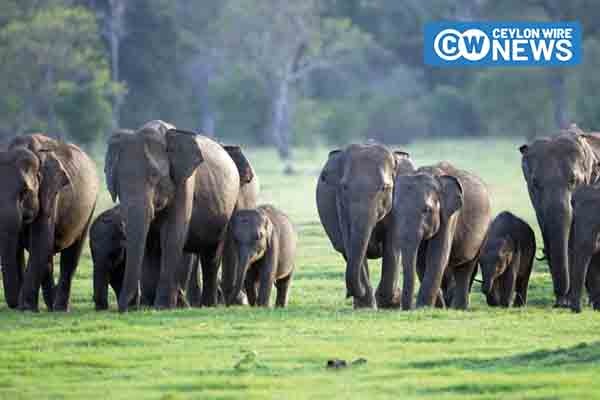
The Sectoral Oversight Committee on Environment, Agriculture and Resource Sustainability has stressed the need to urgently formulate a national policy to address the human-elephant conflict, with the participation of all relevant institutions and stakeholders.
The matter was discussed at a recent committee meeting held in Parliament under the chairmanship of Member of Parliament Hector Appuhamy.
The committee reviewed research findings and policy recommendations from a project jointly implemented by the Coalition for Inclusive Impact (CII), UNESCO and the Centre for Poverty Analysis (CEPA).
Discussions focused on managing the human-elephant conflict, meeting the food and water requirements of wild elephants, improving wildlife habitats and increasing community participation in environmental conservation.
The committee noted the need for an effective management programme to reduce the movement of wild elephants into human settlements, particularly where shortages of food and water within wildlife habitats are a contributing factor.
Members also called for six identified elephant corridors to be gazetted as a priority and for steps to be taken to improve habitats within wildlife reserves and strengthen awareness programmes among local communities.
The meeting also addressed the protection of the Muthurajawela wetland system, including the need to properly survey and demarcate state-owned land and strengthen coordination between government agencies to prevent unauthorized activities.
The challenges faced by small-scale fishing communities and measures to improve their livelihoods were also discussed.
The committee emphasized that environmental challenges, including the human-elephant conflict, should be addressed through evidence-based policies supported by scientific research and reliable data. It further stressed the importance of stronger coordination among state institutions and adapting successful approaches from other countries to suit Sri Lanka’s circumstances.