
US President Donald Trump has said that the war in Iran is “militarily effectively over”, indicating that Washington is not currently planning to resume large-scale airstrikes, while maintaining its military presence and naval blockade in the region.
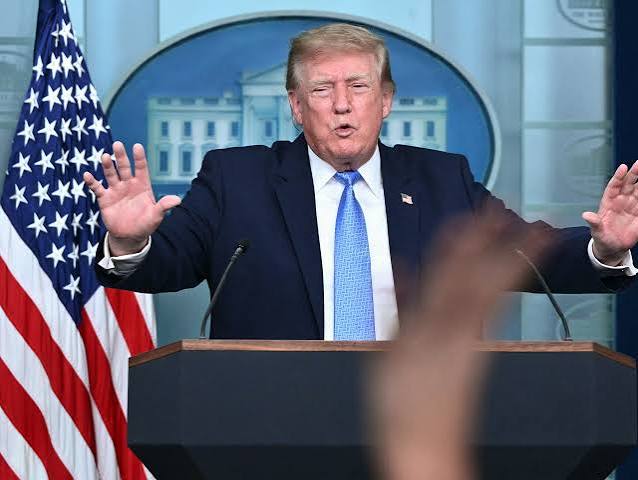
Trump made the remarks during an unexpected appearance in the White House briefing room on Monday, following a meeting with Qatari Prime Minister Sheikh Mohammed bin Abdulrahman bin Jassim Al Thani.
“Iran militarily is effectively over. We’re just keeping it the status quo,” Trump told reporters.
He said Iran’s military leadership had been severely weakened but stressed that Washington was still seeking a long-term solution to prevent the country from advancing its nuclear programme.
The comments represent one of Trump’s clearest indications that he is moving away, at least for now, from previous threats to resume military strikes against Iran.
Trump also said that Iran was communicating with the United States and suggested that diplomatic efforts were making progress.
“They’re talking to us, and they’re talking very politely. And we’ll see what happens,” he said, adding that military action did not currently appear necessary, although US forces remained ready to respond if circumstances changed.
Earlier, in a social media post, Trump said several Middle Eastern allies, including Qatar, Saudi Arabia, the United Arab Emirates, Bahrain and Kuwait, preferred maintaining the current situation.
However, the US has given no indication that it plans to withdraw thousands of troops deployed in waters surrounding Iran or end its naval blockade, which is aimed at restricting Iranian oil exports.
“We’re keeping it going. We have the greatest military blockade ever,” Trump said.
According to two Middle Eastern government officials familiar with the matter, Qatari officials presented proposals last week concerning Iran’s nuclear programme. The White House declined to comment on the reported proposals, although Trump had previously acknowledged ongoing indirect discussions with Tehran.
Iran, meanwhile, continues to demand several concessions before entering nuclear negotiations. These reportedly include an end to the US blockade of Iranian ports, the lifting of sanctions, the unfreezing of Iranian assets, compensation for war-related damage and an end to hostilities across the region, including Israeli military operations in Lebanon.
Earlier on Monday, US Defence Secretary Pete Hegseth said the next steps in the conflict would be decided by Trump. He suggested that the President could declare an end to military operations while maintaining surveillance of Iran’s nuclear materials.
Hegseth has been among the administration’s leading defenders of the military campaign. However, critics have questioned the legal basis for the conflict, arguing that the administration failed to obtain proper congressional authorisation and violated the War Powers Resolution.
Meanwhile, Republican Representative Thomas Massie of Kentucky moved on Monday to force a vote on impeaching Hegseth, largely over his handling of the war.
In a separate interview with CNN on Sunday, Trump said further military strikes were highly unlikely if negotiations continued to make progress and Iran agreed to a strong deal.
However, he warned that the United States had identified potential infrastructure targets, including 38 bridges, that could be attacked if military operations resumed.
Despite Trump’s statements, US forces have continued limited military operations against Iran. These have included at least two strikes on Iranian air defences during the past week.
The US military also fired on and disabled a commercial vessel on Saturday, alleging that it had attempted to breach the naval blockade on Iranian ports.