
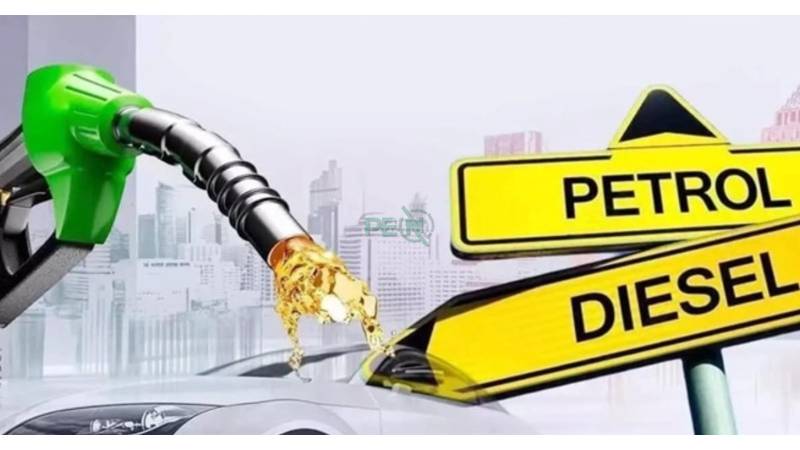
Pakistan is in the grip of its worst fuel price shock in history.
On the 2nd of April, Petroleum Minister Ali Pervaiz Malik and Finance Minister Muhammad Aurangzeb announced a staggering increase: petrol surged by Rs137 to Rs458 per litre, while high-speed diesel jumped by Rs 184 to Rs 520. For millions of Pakistanis, this is not just an economic adjustment; it is a direct hit on daily survival.
The spike follows the disruption of global oil flows after the closure of the Strait of Hormuz in early March, triggered by US-Israeli hostilities against Iran. For a country heavily dependent on imported fuel, the consequences have been immediate and severe. Yet a question persists across markets and households: if Pakistan has secured passage through the Strait, why are prices still rising?
The answer lies in a convergence of global shock and domestic constraint. When Foreign Minister Ishaq Dar announced that Iran had agreed to allow 20 Pakistani-flagged vessels to transit the Strait, with two ships crossing daily, it was a genuine diplomatic achievement. But the exemption solves only a fraction of the problem. The strait’s two unidirectional sea lanes facilitate the transit of around 20 million barrels of oil per day, representing roughly 20% of global seaborne oil trade. Pakistan’s 20-vessel arrangement is a trickle against a torrent. The biggest oil supply shock in history has now reached its second month, with prices surging and shortages emerging across Asia, from Thailand to Pakistan. Even if Pakistani tankers pass freely, they are paying dramatically elevated prices for oil that was already expensive before the war began. The exemption provides supply continuity; it does not provide price relief.
There is a second, less discussed dimension to this crisis that deserves far more public scrutiny. The IMF has shown reluctance to allow flexibility in Pakistan’s petroleum levy, viewing the levy as a key revenue source tied to programme commitments. In other words, as international crude prices surged 80 to 90 per cent, the government found itself boxed in: it could not absorb the shock through levy reductions without risking its IMF programme, and it could not sustain blanket subsidies indefinitely.
The government provided Rs 129 billion in subsidy during the past three weeks by deducting salaries of employees and slashing the Public Sector Development Programme. That fiscal space has now been exhausted. The petroleum levy component alone now accounts for more than 57 per cent of what a consumer pays at the pump, going directly to the government as tax, not to the cost of the fuel itself. This is the arithmetic of constraint: a government unable to absorb a global shock, yet dependent on fuel taxation to sustain itself. The ordinary Pakistani, as ever, absorbs the difference.
The targeted subsidies announced, Rs 100 per litre for two-wheeler users capped at 20 litres per month, and a one-time Rs 1,500 per acre support for small farmers, are genuinely better than nothing. They reflect an understanding that blanket subsidies are fiscally unsustainable. But they are also comically inadequate in scale, given the size of the shock.
Consider: a motorcyclist riding to work daily in Karachi will burn through his 20-litre monthly subsidy in roughly ten days. After that, he faces the full Rs 458-per-litre rate. Meanwhile, the cost of the war will be paid by ordinary consumers, as government functionaries and bureaucrats receive free transport facilities. Cabinet ministers have not changed their travelling patterns. Their vehicles are still escorted by security convoys even within Islamabad’s red zone.
This is the moral failure at the heart of Pakistan’s crisis management: the language of sacrifice has never been applied equally. The state asks the people to absorb Rs 520-per-litre diesel while its own machinery of privilege hums along undisturbed.
There is an old parable about a king and a bread maker. When the baker’s costs rose, he asked permission to increase the price of bread from 3 to 6 rupees. The king instead advised him to raise it to 15. The public erupted. The king intervened, ordered a reduction, and the price was lowered to 9. The crowd celebrated the “relief.” But the bread still costs three times more than before.
Pakistan’s fuel crisis has unfolded with disquieting similarity to this parable. On April 2nd, petrol was raised by Rs 137 in a single revision to Rs 458 per litre, the shock was enormous, the public outcry immediate. Within days, amid considerable political theatre involving Nawaz Sharif reportedly urging the Prime Minister to provide relief, a reduction was announced. The petroleum levy was cut by Rs 80, bringing the price down to Rs 380 per litre. The public breathed a sigh of relief. The government claimed credit for listening to the people. The net effect is a permanent upward shift, softened by a temporary retreat. The question is not how much was given back, but how much was kept.
Fuel pricing has long been a powerful political weapon in Pakistan, but far harder to manage in government than to critique in opposition. In October 2021, at a rally in Faisalabad, Maryam Nawaz Sharif invoked a past statement by Imran Khan: “When the prices of electricity and petrol increase, then understand that the prime minister is a thief.” At the time, petrol was around Rs 137 per litre. Today, under her party’s government, it has more than tripled.
This is less a story of political inconsistency than of structural constraint. Governments change; the underlying vulnerabilities do not.
What this crisis has exposed, clearly and brutally, is Pakistan’s deep structural dependence on imported hydrocarbons. The country lacks meaningful strategic reserves, has limited refining capacity, and has made slow progress on alternative energy. These weaknesses have been known for decades. What has changed is the scale of the consequences.
Every government since Musharraf has spoken of energy security. Every budget has underfunded the transition. Every IMF programme has prioritised short-term stabilisation over long-term resilience. The result is a country with no buffer when global energy arteries rupture.
The immediate crisis will pass. Oil flows will stabilise, and prices will eventually moderate. But unless Pakistan addresses the structural issues that have made it so exposed, its dependence on imports, its limited reserves, and its constrained fiscal architecture, the next shock will produce the same outcome.
For now, the burden rests where it usually does: on the ordinary consumer. And as prices climb, the crisis reveals something larger than energy vulnerability, it reveals the limits of governance itself. And when the next government stands before a crowd and declares that rising fuel prices prove the prime minister is a thief, perhaps someone in that crowd will remember: the bread used to cost 3 rupees.