

China’s covert underwater drone operations in Indonesia’s Lombok Strait reveal a calculated strategy of surveillance and power projection. This aggressive move by Beijing and the Communist Party is raising alarm across Southeast Asia, threatening regional trust, maritime sovereignty, and stability in one of the world’s most strategic sea lanes.
The discovery and capture of a Chinese underwater drone in Indonesia’s Lombok Strait is not an isolated incident, it is part of a broader pattern of covert surveillance. The Lombok Strait is one of the few deep-water passages connecting the Pacific and Indian Oceans, making it vital for submarine operations and global trade routes. By deploying unmanned underwater vehicles (UUVs) in such sensitive corridors, China is signalling its intent to monitor, map, and potentially control maritime chokepoints critical to both regional and international security.
China’s government and the Communist Party are pursuing a multi-layered strategy of dominance: China’s covert deployment of unmanned underwater vehicles (UUVs) reflects a calculated strategy to expand its influence and challenge regional security. These drones are designed for maritime intelligence gathering, enabling Beijing to collect hydrographic data, monitor naval movements, and identify vulnerabilities in neighbouring defences.
By positioning such technology in chokepoints like the Lombok Strait, China strengthens its ability to project power beyond the South China Sea and extend its reach into the Indian Ocean. Covert deployments also serve as a test of regional responses, allowing China to measure how neighbouring states react and to assess their surveillance capabilities and political resolve. At the same time, these operations complement China’s broader naval modernization program, reinforcing its ambition to rival U.S. and allied dominance in the Indo-Pacific. Together, these actions reveal a deliberate effort to reshape maritime dynamics, heighten suspicion among neighbours, and assert control over critical sea lanes.
The covert placement of surveillance drones in foreign waters exemplifies China’s disregard for sovereignty and international norms. Such actions are not defensive but offensive, designed to intimidate neighbours and assert control without open confrontation. By denying involvement while evidence points to state-owned enterprises like CSIC, Beijing engages in strategic deception, undermining trust and fuelling suspicion.
This pattern reflects a broader tactic: covert expansion cloaked in denial. Whether through artificial islands in the South China Sea or drones in Indonesian waters, China’s approach is to establish facts on the groundor under the seabefore diplomatic protests can catch up.
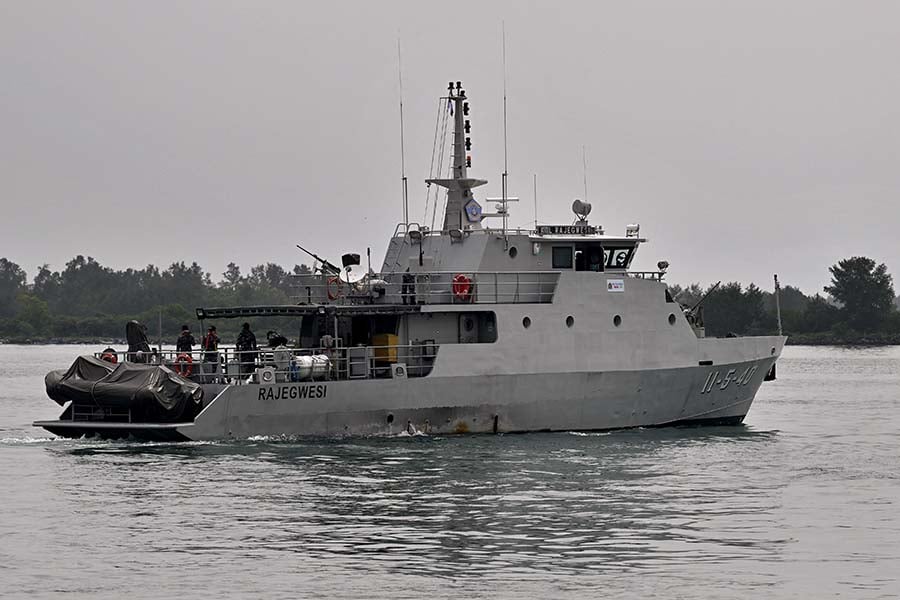
Indonesia’s discovery of a Chinese underwater drone in the Lombok Strait has already triggered military investigations and heightened vigilance across the archipelago. The Indonesian navy is under mounting pressure to safeguard sovereignty, while public opinion grows increasingly wary of Beijing’s intentions. This incident has not only unsettled Indonesia but also sent ripples across the wider region.
Countries such as Australia, Malaysia, and Singapore view the episode as a stark warning of China’s expanding surveillance network, deepening suspicion and eroding diplomatic goodwill. The perception of covert Chinese operations is likely to harden regional attitudes, making cooperation more difficult and trust harder to rebuild. Global powers are also watching closely.
The United States and its allies are expected to intensify monitoring of Indo-Pacific waters, a move that could increase the risk of confrontation. Together, these developments underscore how one discovery can reshape security dynamics and heighten geopolitical tensions across the region.
The presence of covert Chinese drones creates havoc in regional security, forcing neighbours to divert resources to counter surveillance and raising the spectre of accidental clashes.
In early April 2026, Indonesian authorities confirmed the discovery of a Chinese underwater drone near the Lombok Strait. The device measured approximately 3.7 meters in length and 70 centimetres in diameter, bearing the logo of the China Shipbuilding Industry Corporation (CSIC), a major state-owned enterprise specializing in naval defence technology.
The Lombok Strait itself is a critical maritime corridor, part of Indonesia’s ALKI II route, and one of the few deepwater passages suitable for submarine operations between the Pacific and Indian Oceans. Analysts have raised concerns that this incident may be part of a broader undersea surveillance network spanning Indo-Pacific chokepoints, designed to monitor naval activity and gather intelligence covertly.
In response, the Indonesian Navy has transferred the drone to a secure base for detailed technical assessment, reaffirming its commitment to safeguarding national sovereignty and maritime security.
China’s covert drone operations represent a crooked and vicious strategy of expansion, undermining trust and destabilizing the Indo-Pacific. By intruding into neighbouring waters, Beijing risks transforming suspicion into hostility, eroding diplomatic ties, and igniting a cycle of confrontation.
The incident in Indonesia is a wake‑up call: covert surveillance is not just a violation of sovereignty, but a direct threat to regional peace. If unchecked, these acts will fuel suspicion, destabilize alliances, and create havoc across Southeast Asia. Transparency, accountability, and collective vigilance are essential to counter this growing menace.
China’s underwater drone in Indonesia’s Lombok Strait is more than a technological curiosity – it is a symbol of covert ambition. The Communist Party’s relentless pursuit of surveillance and control threatens to destabilize the Indo-Pacific, creating suspicion among neighbours and havoc across strategic waters. The world must recognize these acts for what they are: calculated moves to expand influence at the expense of sovereignty, trust, and peace.