
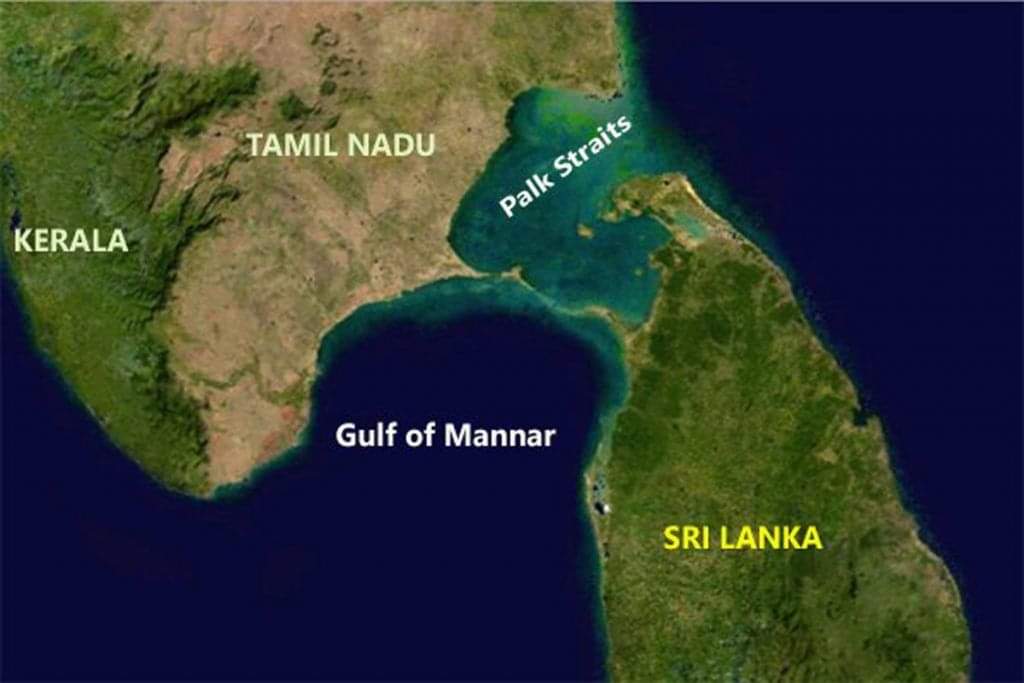
It is a striking geographic paradox that while the maritime distance between Colombo and Chennai spans roughly 300 kilometers, the actual space separating the closest land borders of India and Sri Lanka at Rameswaram and Talaimannar is a mere 30 kilometers. Addressing this physical gap at the Global Innovation and Leadership Summit in Colombo, India’s High Commissioner Santosh Jha characterized the lack of direct roads, railways, or grid pipelines between such close neighbors as an outright “anomaly”. Emphasizing that the underlying engineering is completely understood and the commercial rewards unmistakable, Jha delivered a firm reminder to the region’s leadership: “the time for wavering is over”. A fixed link would fundamentally transform local economic geography, enabling Sri Lanka to realize its maritime hub aspirations in a manner that isolated port expansions simply cannot achieve alone. Historically, domestic hesitation within Sri Lanka has stalled physical connectivity due to protective apprehensions regarding sovereign vulnerability. However, a detailed policy brief titled “Bridging the Palk Strait: Assessing Indo-Lanka Land Connectivity,” published by the Centre for Policy Alternatives (CPA) and authored by Shahane De Silva, systematically dismantles these concerns. The report highlights that a land bridge is far more likely to diminish the probability of regional friction by fostering deep, mutual interdependence between the two nations rather than an asymmetric dependency. For instance, the infrastructure would firmly tie India’s massive domestic logistics network to the efficiency of Sri Lankan transit lanes while simultaneously shielding Colombo Port from aggressive competition by emerging deepwater regional rivals, such as Kerala’s newly operational Vizhinjam Port. Far from diminishing economic sovereignty, a land corridor serves as a structural shield that preserves Sri Lanka’s critical intermediate role in global maritime trade.
On a grassroots level, the true dividend of this proposed fixed link lies in its capacity to decentralize economic growth across the island. Currently, Sri Lanka’s Northern, Eastern, and North Central provinces remain disproportionately disconnected from macro-economic trade corridors. The CPA report demonstrates that a direct rail and road bridge across the Palk Strait would allow provincial business communities to engage in international commerce directly with the Indian mainland, completely bypassing the congested intermediate logistics networks of Colombo. Additionally, the land bridge addresses a major bottleneck in the island’s primary economic engine: tourism. By offering an affordable alternative to expensive commercial flights, the link would seamlessly funnel high-volume tourist traffic from Southern India directly into these historically underdeveloped areas, generating vital localized employment opportunities and driving regional industrial initialization.
Nevertheless, executing a cross-border project of this magnitude demands meticulous, calculated caution regarding ecological and security boundaries. Marine scientists have continuously highlighted the vulnerability of the unique ecosystems around Adam’s Bridge. In the CPA study, prominent biodiversity specialist Rohan Pethiyagoda notes that while surrounding marine life possesses a prehistoric evolutionary resilience to land links, stringently managed construction protocols are non-negotiable to protect critical wildlife sanctuaries and local bird nesting sites. Consequently, any progression must be contingent upon a comprehensive, international Environmental Impact Assessment. Furthermore, critics point to the risk of illicit trafficking over a land border. To counter this, Sri Lanka must establish robust border-management infrastructure. By adopting global best practices from highly secure corridors like the Johor-Singapore Causeway and implementing coordinated intelligence-sharing loops, the state can easily protect its borders. Bridging the Palk Strait represents a deliberate transition away from isolating anxieties and a strategic move toward anchoring Sri Lanka to the world’s fastest-growing major economy.