

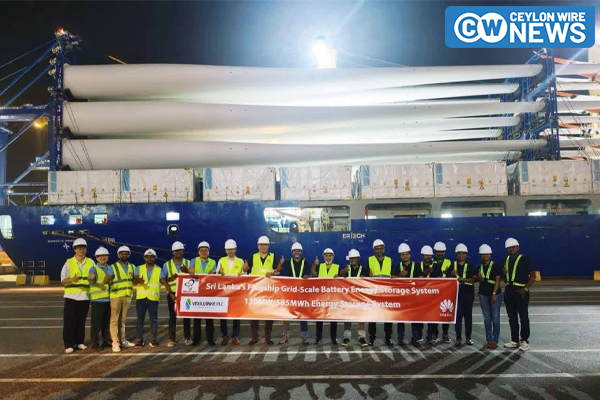
Sri Lanka has received a 60-megawatt battery storage system under the second phase of the Battery Energy Storage Systems (BESS) project aimed at strengthening grid stability and expanding renewable energy integration.
Deputy Minister of Power Arkam Ilyas stated that the latest shipment, carrying the 60MW system, was unloaded at the Colombo Port last Friday night.
With the arrival of the new system, Sri Lanka has now received a total of 80 megawatts out of the planned 160-megawatt battery storage capacity, following the earlier delivery of a 20MW system.
Under the project, authorities plan to establish 16 battery energy storage centers, each with a capacity of 10 megawatts and 40 megawatt hours (40MWh).
The storage systems are scheduled to be installed at substations located in:
- Kilinochchi
- Vavuniya
- Polonnaruwa
- Valachchenai
- Ampara
- Monaragala
- Mahiyanganaya
- Chunnakam
- Beliatta
- Galle
- Puttalam
- Hambantota
- Old Anuradhapura
- Mahawa
- Norochcholai
According to Deputy Minister Ilyas, the systems will store excess electricity generated from renewable sources such as solar power during periods of low demand and release it back into the grid during peak demand periods, particularly at night.
The government says the project is expected to:
- Improve voltage and frequency control within the national grid
- Increase power system stability
- Provide backup power during outages
- Reduce reliance on costly diesel generation
- Minimize wastage of renewable energy generation
The Deputy Minister stated that while electricity generated using diesel currently costs around Rs. 115 per unit, electricity supplied through battery storage systems is estimated to cost around Rs. 35 per unit.
Authorities also believe the initiative will contribute towards Sri Lanka’s target of generating 70 percent of its electricity from renewable energy sources by 2030 and help reduce electricity costs for consumers.
Meanwhile, the government is also planning additional storage projects, including a proposed 100MW BESS project in Kolonnawa and other battery storage initiatives with capacities of 250MW and 50MW currently under evaluation.