
The Ministry of Health and Mass Media has announced a major initiative to strengthen diagnostic healthcare services across Sri Lanka through the provision of 11 advanced CT scanners valued at approximately Rs. 1.95 billion.
According to the Ministry, the programme is being implemented under the guidance of Minister of Health and Mass Media Dr. Nalinda Jayatissa and aims to modernize diagnostic facilities while improving patient access to timely and accurate medical investigations.
Health authorities stated that the new scanners will significantly enhance the diagnosis of strokes, cancers, heart diseases, vascular conditions, trauma-related injuries, and other medical emergencies.
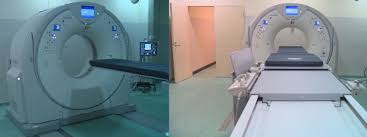
As part of the programme, a state-of-the-art 128-slice CT scanner valued at over Rs. 200 million has already been installed at the Kalutara Teaching Hospital. In addition, a CT scanner worth Rs. 160 million has been installed at the Kurunegala Teaching Hospital.
The Ministry further revealed that four advanced CT scanners, valued at approximately Rs. 640 million, have been supplied to the National Hospital of Sri Lanka, National Hospital Kandy, National Hospital Galle, and Colombo South Teaching Hospital with assistance from the Asian Development Bank (ADB).
Installation work at these institutions is currently underway.
Meanwhile, arrangements are being made to procure additional CT scanners worth approximately Rs. 950 million for the Kuliyapitiya Teaching Hospital and the District General Hospitals in Dambulla, Nawalapitiya, Chilaw, and Mannar.
Health officials noted that many government hospitals have relied on older 16-slice CT scanners for several years. The introduction of modern 64-slice and 128-slice CT technology is expected to provide significantly higher image quality, faster scanning times, and more accurate diagnoses.
The upgraded equipment will enable healthcare professionals to identify critical conditions, including strokes, cancers, cardiovascular diseases, vascular disorders, and accident-related injuries more efficiently, improving treatment outcomes and reducing delays in medical intervention.
The programme also extends benefits to hospitals managed by provincial councils, ensuring that patients in rural and remote areas gain improved access to advanced diagnostic services closer to their homes.
According to the Ministry, the investment forms part of broader healthcare reforms aimed at strengthening early disease detection, enhancing clinical decision-making, reducing waiting times, and improving the overall quality of patient care across Sri Lanka.