

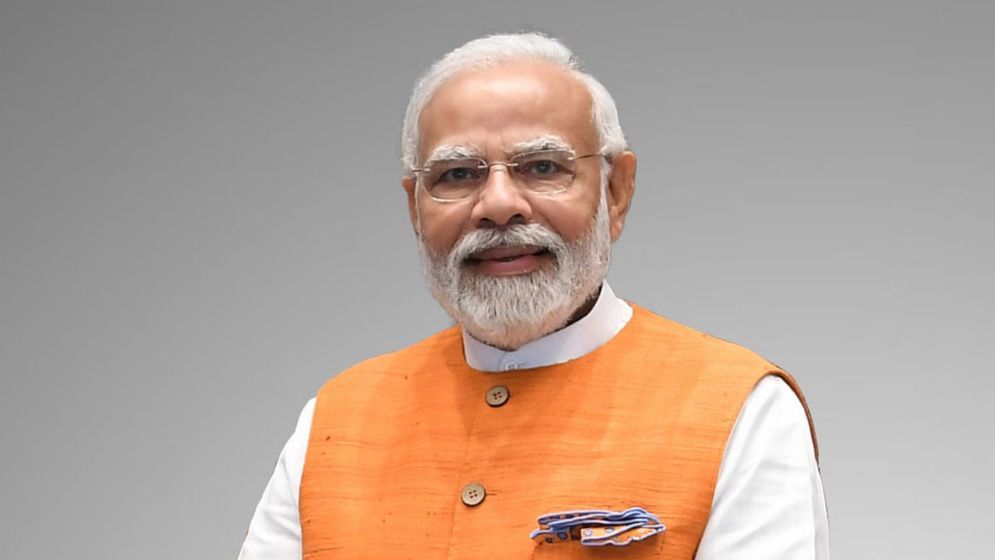
Indian Prime Minister Narendra Modi’s six-day visit to Indonesia, Australia and New Zealand from 6 to 11 July was more than another round of high-level diplomacy. It reflected India’s growing determination to shape the strategic and economic landscape of the Indo-Pacific at a time when global politics is becoming increasingly fragmented. For Bangladesh, the significance of the tour lies not in where Modi travelled, but in what India’s evolving regional strategy could mean for its closest neighbours.
The Indo-Pacific has become the principal theatre where economics, security and technology increasingly intersect. Competition between the United States and China continues to reshape global supply chains, maritime security arrangements and access to critical resources. Rather than positioning itself as merely a participant in this rivalry, India appears intent on becoming one of the region’s principal agenda-setters.
That ambition was evident throughout the tour. Discussions with Indonesia centred on maritime cooperation, defence ties and critical minerals. Australia remained a key partner in energy security, critical minerals and negotiations towards a Comprehensive Economic Cooperation Agreement. New Zealand added another dimension by strengthening economic engagement and broadening cooperation in agriculture, education and innovation. Collectively, the three visits reinforced India’s “Act East” policy while projecting a vision of a free, open and rules-based Indo-Pacific.
For Bangladesh, these developments should not be viewed through the narrow prism of India’s bilateral diplomacy. They raise broader questions about how the region itself is changing—and where Dhaka intends to position itself within that transformation.
Perhaps the most important lesson concerns economic resilience.
The pandemic, geopolitical conflicts and export restrictions have demonstrated how vulnerable modern economies have become to disruptions in supply chains. India is responding by diversifying access to critical minerals such as nickel, copper and rare earth elements that underpin electric vehicles, semiconductors and renewable energy technologies. While Bangladesh lacks comparable mineral resources, it faces similar vulnerabilities as it seeks to modernise its manufacturing base and move beyond low-cost garment exports.
Rather than treating India’s economic strategy as competition, Bangladesh could view it as an opportunity to deepen industrial cooperation, attract technology investment and integrate more effectively into regional value chains. As Bangladesh graduates from Least Developed Country (LDC) status, maintaining export competitiveness will depend increasingly on stronger regional production networks rather than preferential market access alone.
Equally significant is the maritime dimension.
For decades, Bangladesh’s relationship with India has largely revolved around land borders, connectivity and river-water sharing. Those issues remain important, but the strategic centre of gravity is gradually shifting towards the Bay of Bengal.
India’s growing emphasis on maritime domain awareness, port connectivity and secure sea lanes reflects a wider recognition that economic prosperity increasingly depends on the oceans. Bangladesh, with its strategic coastline and expanding blue economy ambitions, occupies a central location within this evolving geography.
This convergence presents opportunities rather than dilemmas. Improved maritime cooperation could strengthen disaster response, fisheries management, marine scientific research, port efficiency and the security of vital shipping routes that carry much of South Asia’s trade. The Bay of Bengal should no longer be viewed simply as a shared body of water but as a shared economic space.
Climate cooperation offers another area where strategic interests naturally overlap.
Few countries understand the consequences of rising sea levels, cyclones and coastal erosion better than Bangladesh. India faces many of the same challenges along its eastern coastline and delta regions. As both countries invest in climate-resilient agriculture, disaster preparedness and resilient infrastructure, there is considerable scope for joint research, technology sharing and coordinated adaptation strategies.
Such collaboration would also strengthen regional resilience at a time when climate risks increasingly overlap with food security, migration and economic stability.
None of this suggests that Bangladesh should simply align itself with India’s strategic outlook. Dhaka has consistently pursued a foreign policy based on balanced engagement with all major partners, including China, India, Japan, the United States and ASEAN. That approach has served the country well and should remain the cornerstone of its diplomacy.
The challenge, however, is ensuring that strategic balance does not become strategic passivity.