

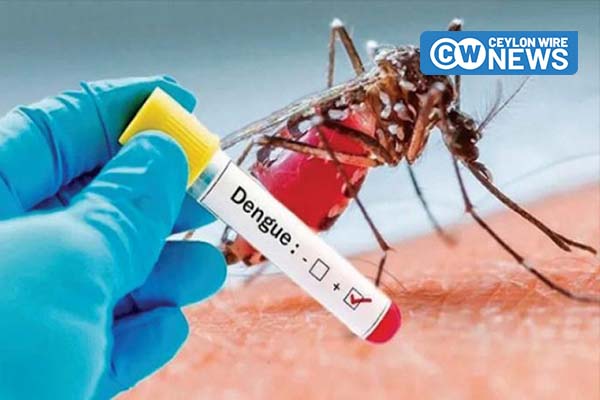
The number of Medical Officer of Health (MOH) divisions identified as being at risk of a dengue outbreak has increased to 112, according to the National Dengue Control Unit (NDCU).
Health authorities report that the highest number of dengue cases is currently being recorded from the Maharagama MOH division. Panadura in the Kalutara District and Biyagama in the Gampaha District have also been identified as areas experiencing a rapid spread of the disease.
Speaking on the current situation, Community Physician Specialist Dr. Prashila Samaraweera stated that Colombo, Gampaha, Matara, Galle, Kandy, Ratnapura, and Kalutara have been identified as the districts most affected by dengue.
She noted that despite continuous government intervention and ongoing dengue control programmes, the failure of communities to eliminate mosquito breeding sites remains a major obstacle to controlling the spread of the disease.
Dr. Samaraweera urged the public to make use of the weekend to inspect and clean their surroundings, warning that the situation could worsen if preventive measures are not strictly followed.
The National Dengue Control Unit further revealed that hospital wards in several districts have reached maximum capacity due to the increasing number of dengue patients. Hospitals in the Colombo District, along with several institutions in other high-risk areas, are among those facing capacity constraints.
According to official data, more than 45,000 dengue cases have been reported across the country so far this year, marking a significant increase compared to previous years.
Although the island-wide dengue control programme concludes today, Public Health Inspectors (PHIs) will continue surveillance and mosquito control activities in identified high-risk areas.
Health authorities emphasized that preventing dengue is a shared responsibility and urged the public to regularly remove stagnant water, maintain clean surroundings, and eliminate potential mosquito breeding sites in and around their homes.
Officials warn that sustained public cooperation will be essential to preventing further outbreaks and reducing pressure on the healthcare system.