

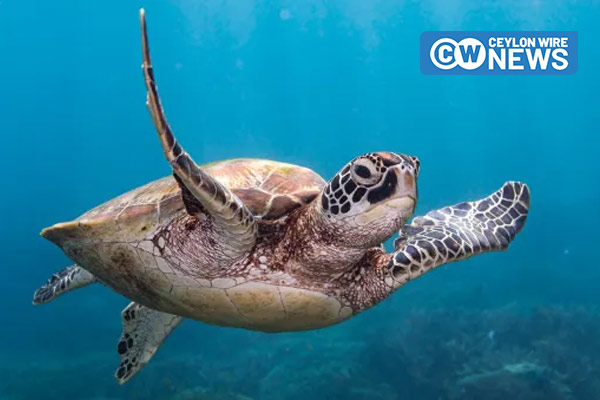
Environmentalists have warned that sea turtles are facing increasing threats from human activities, placing the survival of several endangered species at risk.
The warning comes as Sri Lanka joins the global community in observing World Sea Turtle Day on June 16, an occasion dedicated to raising awareness about the conservation of sea turtles and the protection of marine ecosystems.
Sri Lanka is regarded as one of the most important sea turtle nesting destinations in the Indian Ocean. Five of the world’s seven sea turtle species regularly visit the island’s southern and western coastlines to lay their eggs. These include the Green Turtle, Loggerhead Turtle, Leatherback Turtle, Hawksbill Turtle, and Olive Ridley Turtle.
Conservationists note that the presence of these species highlights Sri Lanka’s rich marine biodiversity. However, increasing levels of ocean pollution and other human-induced pressures continue to threaten their long-term survival.
Among the most significant threats is plastic pollution. Sea turtles often mistake floating plastic waste for food, leading to injuries, starvation, digestive complications, and, in many cases, death.
Environmental groups also point to dangers posed by abandoned fishing gear, entanglement in fishing nets, illegal collection and smuggling of turtle eggs, and uncontrolled tourism activities near nesting beaches.
To address these challenges, the Ministry of Environment and several state agencies, including the Department of Coastal Conservation and Coastal Resources Management and the Marine Environment Protection Authority, have implemented a range of conservation initiatives aimed at protecting turtle habitats and preserving coastal ecosystems.
Authorities stress that maintaining clean beaches is essential to ensuring safe nesting environments for sea turtles. The Department of Wildlife Conservation, together with various volunteer organizations, continues to monitor nesting sites and safeguard turtle eggs and hatchlings.
Despite ongoing conservation efforts, environmentalists emphasize that public participation remains critical to the long-term protection of sea turtles. They have urged coastal communities, fishermen, tourism operators, and the general public to play a more active role in reducing pollution and protecting nesting habitats.
Marking World Sea Turtle Day, conservation organizations have called on all Sri Lankans to support efforts to preserve these ancient marine species and ensure their survival for future generations.