
Sri Lanka’s elections may no longer be fought only on political stages or campaign platforms. Increasingly, they are being shaped online — through manipulated narratives, hate speech, coordinated misinformation campaigns, and now, AI-generated content that can spread faster than traditional reporting can respond.
For journalists, this creates a new kind of challenge. Reporting the news is no longer simply about gathering facts. It now requires the ability to recognise digital manipulation, understand election-related legal frameworks, and navigate the growing pressure created by information disorder during politically sensitive periods.
Recognising these risks, the Media Law Forum (MLF) Sri Lanka launched the project Strengthening Resilience Against Disinformation in Sri Lanka in partnership with Democracy Reporting International (DRI) and Factum, with co-funding support from the European Union.
The initiative comes against a troubling backdrop. Studies examining Sri Lanka’s 2019 presidential and 2020 parliamentary elections found that online disinformation campaigns disproportionately targeted Muslim and Tamil communities, while women candidates also faced increasing levels of gender-based hate speech. United Nations findings showed that harmful online speech surged significantly during the 2020 election period.
Although the country witnessed relatively calmer election cycles during the 2024 presidential and parliamentary polls and the 2025 local government elections, media experts warn that the underlying risks remain unresolved — especially as generative artificial intelligence tools become more accessible and harder to detect.
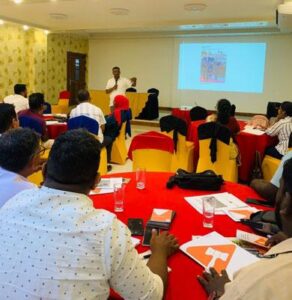
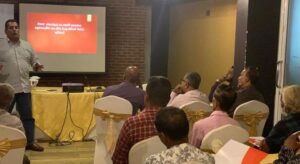
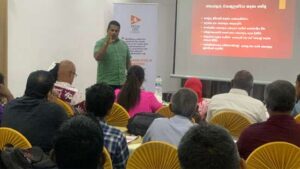
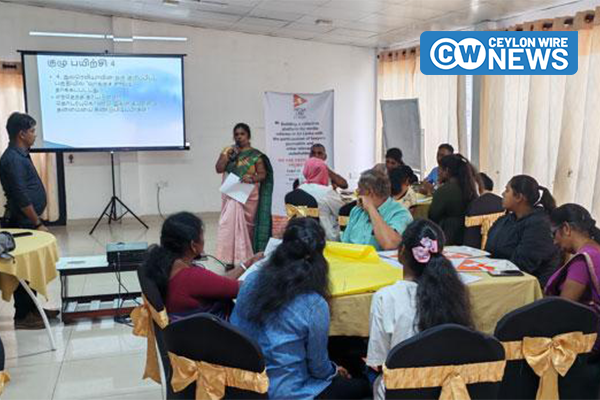
Rather than limiting discussions to Colombo-based seminars, MLF designed the programme to directly engage journalists in their own working environments. Training sessions were conducted both inside media institutions and across regional districts, reaching journalists from print, television, radio, and digital platforms in Sinhala, Tamil, and English.
The sessions focused on practical newsroom realities: election reporting guidelines, digital campaign finance regulations, legal limits surrounding hate speech, ethical reporting during communal tensions, and methods of identifying manipulated or AI-generated content.
More than 150 journalists involved in active news production participated in the Colombo sessions alone, while regional workshops expanded the reach to provincial media practitioners who often have limited access to specialised legal and digital literacy training.
Importantly, the programme also prioritised broader inclusion within the media sector, with female journalists making up nearly 40% of participants.
Feedback from journalists reflected the growing demand for this kind of support. Participants noted that many media institutions still struggle to fully understand election-related legal obligations and the rapidly changing digital information environment.
For younger journalists especially, the sessions provided practical guidance that could immediately be applied inside newsrooms, particularly when covering sensitive political or ethnic issues during election periods.
At a time when public trust in information is increasingly fragile, initiatives like this are becoming less about optional professional development and more about safeguarding the quality of public discourse itself.
For legal support related to election reporting or freedom of expression issues, MLF’s 24-hour hotline remains available at 0743070888.