
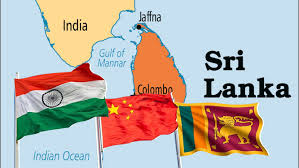
Sri Lanka’s trade landscape in 2025 has shifted once again, with China overtaking India as the island’s largest trading partner. While this development reflects a surge in post-restriction imports—particularly vehicles and industrial goods—it has also reignited concerns over economic dependency and long-term sustainability.
China’s Dominance Driven by Imports, Not Partnership
The rise of China as Sri Lanka’s top trading partner is largely import-driven rather than export-led growth. Imports from China have surged, fueled by relaxed restrictions and competitive pricing, especially in sectors such as automobiles and electronics.
However, this has led to a widening trade imbalance. Sri Lanka’s trade deficit with China is estimated to be in the range of $4–5 billion, with imports exceeding $5 billion while exports remain below $400 million, highlighting a significant gap in bilateral trade.
This imbalance is not merely a statistical concern, it represents a significant outflow of foreign exchange at a time when Sri Lanka is still recovering from an economic crisis.
Impact on Local Industry and Economic Sovereignty
Economists warn that the influx of low-cost Chinese goods, often supported by heavy state subsidies—has created intense pressure on local industries. Domestic manufacturers struggle to compete with artificially low prices, leading to reduced production capacity and increased dependency on imports.
This trend risks creating what analysts describe as a “manufacturing vacuum,” where Sri Lanka gradually loses its ability to produce key goods independently .
Such a shift could weaken economic sovereignty, leaving the country vulnerable to external supply chain disruptions and pricing controls.
FTA Concerns: A One-Sided Advantage?
Negotiations on the proposed China–Sri Lanka Free Trade Agreement (FTA) are nearing completion, but the deal has raised red flags among policymakers and economists.
While FTAs are typically designed to promote mutual growth, there are concerns that this agreement may disproportionately benefit China. Sri Lanka could be required to reduce tariffs on Chinese goods, further increasing imports and reducing government revenue from customs duties.
At the same time, non-tariff barriers, such as stringent quality standards and regulatory requirements may continue to restrict Sri Lankan exports, limiting the country’s ability to benefit equally from the agreement.
India’s Role: A More Complementary Trade Partner
In contrast, India has historically maintained a more balanced trade relationship with Sri Lanka. Geographic proximity, cultural ties, and regional integration have allowed for stronger bilateral cooperation across sectors such as energy, infrastructure, and services.
Unlike the heavily import-driven trade with China, Sri Lanka’s economic engagement with India has increasingly focused on investment, connectivity, and mutual market access. This creates opportunities for more sustainable growth rather than dependency.
India’s regional approach, particularly through South Asian and Indian Ocean partnerships, also aligns more closely with Sri Lanka’s long-term economic and strategic interests.
Strategic Stakes in the Indian Ocean
The potential expansion of Chinese economic influence through trade and investment also carries geopolitical implications. A deeper Chinese footprint in Sri Lanka could transform the island into a hub for Chinese production and logistics in the Indian Ocean.
While this may bring short-term economic gains, it risks limiting Sri Lanka’s strategic autonomy and complicating its relationships with regional partners, including India.
The Case for Diversification
Experts emphasize that Sri Lanka’s path forward lies not in over-reliance on a single partner, but in diversification. Strengthening trade ties with India, ASEAN nations, and other global markets could help create a more resilient and balanced economic framework.
Promoting value-added exports, protecting local industries, and negotiating fair trade agreements will be essential to ensuring long-term stability.
China’s return as Sri Lanka’s largest trading partner reflects a surge in economic activity, but one that is heavily skewed toward imports and dependency.
In contrast, India presents a more balanced and sustainable partnership model, offering opportunities for growth that align with Sri Lanka’s long-term economic and strategic priorities.
As Sri Lanka navigates its recovery, the challenge will be clear: choosing trade relationships that build resilience rather than deepen vulnerability.