
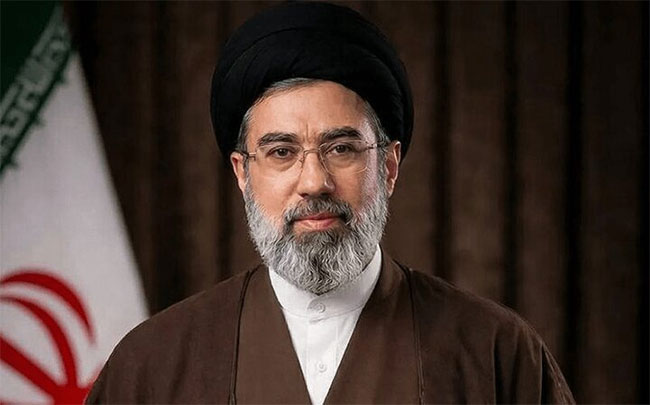
Iran’s Supreme Leader Mojtaba Khamenei has declared that the country will safeguard its nuclear and missile capabilities as “national assets,” signaling a firm stance amid ongoing tensions with the United States.
In a written statement broadcast on state television, Khamenei maintained a defiant tone, stressing that Iran would not compromise on its strategic capabilities despite international pressure. His remarks come as U.S. President Donald Trump continues to push for a broader agreement following a fragile three-week ceasefire.
The situation is further complicated by disruptions in global energy markets. Iran has restricted access through the Strait of Hormuz, a key waterway through which roughly one-fifth of the world’s oil supply passes. Meanwhile, U.S. naval measures targeting Iranian oil exports have intensified pressure on Tehran.
Global oil prices have surged in response, with Brent crude climbing to around $126 per barrel, reflecting fears of prolonged supply disruptions.
Despite the standoff, diplomatic efforts continue. Pakistan has indicated that it is facilitating indirect talks between Washington and Tehran, while encouraging direct communication to ease tensions.
Khamenei’s statement also suggested that Iran intends to maintain control over the Strait of Hormuz, a move that has drawn criticism from regional players such as the United Arab Emirates, who view such actions as a threat to free navigation.
The ongoing impasse highlights the broader geopolitical struggle over nuclear policy, regional security, and global energy stability, with both sides appearing entrenched in their positions.