
The Government expects to introduce Sri Lanka’s long-delayed Cybersecurity Act during the first half of 2027, Deputy Minister of Digital Economy Eranga Weeraratne has announced.
The proposed legislation, described as one of the country’s most significant cybersecurity reforms, has been under development for several years. Weeraratne said several drafts had been prepared since 2019, but none had progressed to implementation.
He confirmed that the latest draft has now been submitted to the Attorney General’s Department for review and is in its final stages.
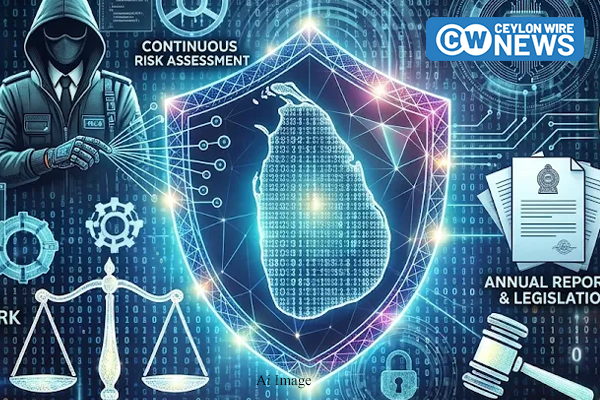
Under the proposed law, a Cybersecurity Authority will be established with powers to regulate the country’s digital systems, conduct mandatory cybersecurity audits and take legal action against cyber threats.
Meanwhile, the Government has expanded efforts to strengthen digital security across state institutions.
Sri Lanka CERT is currently conducting continuous security audits at 150 government institutions, with plans to increase coverage to 250 institutions by next year.
Seventeen key institutions, including the Presidential Secretariat, Prime Minister’s Office, Parliament and Ministry of Finance, have already been connected to the National Cyber Security Operations Centre (NCSOC).
The Cabinet has also directed that another 37 state institutions be integrated into the system by December 31, 2026.
The Government plans to extend NCSOC coverage to 150 institutions by 2029, with support from the Asian Development Bank (ADB).
Weeraratne further said reports containing sensitive information about the country’s cyber vulnerabilities would not be made public, as disclosure could threaten national security.
He added that the accountability of the proposed Cybersecurity Authority would be ensured through parliamentary oversight.