

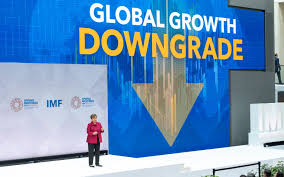
The United Nations has lowered its forecast for global economic growth, warning that the ongoing Middle East crisis has renewed inflationary pressures and increased global economic uncertainty.
According to the UN’s mid-year update to the World Economic Situation and Prospects report:
- Global GDP growth is now forecast at 2.5% in 2026, down from an estimated 3.0% in 2025
- The revised figure is 0.2 percentage points lower than the UN’s January forecast and remains well below pre-pandemic growth levels
- A modest recovery to 2.8% growth is projected for 2027
The UN noted that resilient labor markets, strong consumer demand, and AI-driven trade and investment are expected to support economic activity, although the overall global outlook remains weak.
The report also warned that rising energy prices linked to geopolitical tensions have:
- Increased living and business costs
- Reignited inflationary pressures
- Disrupted fertilizer supplies and agricultural production
- Pushed up food prices globally
Inflation forecasts were revised upward:
- In developed economies, inflation is expected to rise from 2.6% in 2025 to 2.9% in 2026
- In developing economies, inflation is projected to increase from 4.2% to 5.2%
The report highlighted regional impacts:
- Western Asia is expected to suffer the most severe economic damage, with growth forecast to fall from 3.6% to 1.4%, largely due to infrastructure damage, trade disruptions, and tourism losses.
- The United States is projected to remain relatively resilient, with growth expected at 2.0% in 2026, supported by consumer spending and technology investment.
- In European Union countries, growth is projected to slow from 1.5% to 1.1%, while the United Kingdom is expected to slow from 1.4% to 0.7%, partly due to dependence on imported energy.
- China is expected to see growth moderate from 5.0% to 4.6%, though diversified energy supplies and policy support are expected to cushion the impact.
- India is still forecast to record strong growth of 6.4%, though lower than the previous 7.5% projection.
- Across Africa, average economic growth is projected to ease slightly from 4.2% to 3.9%.
The report also noted that while global financial markets have remained relatively stable, rising inflation expectations have pushed short-term bond yields higher.